






The Unlikely Villain in the Room
There’s a subtle irony in being a parent in 2024. You might try to limit your kid’s screen time, only to turn around and see them watching *Cars* on an iPad, *Finding Nemo* on the living room TV, or *Inside Out* on a phone in the backseat. Thanks to the wild
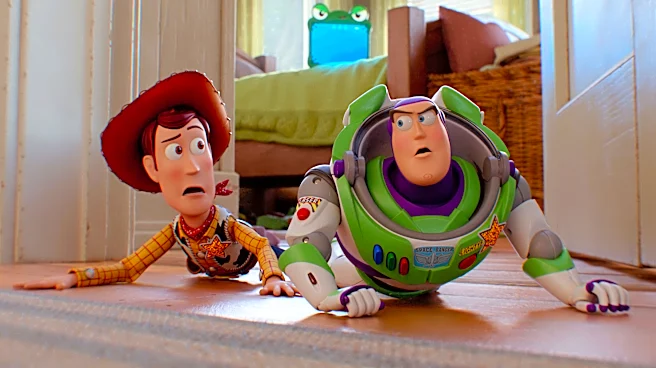
success of Disney+, Pixar is no longer just a special trip to the movie theater; it’s a constant, on-demand presence. The studio that gave us Woody and Buzz—icons of analog, imaginative play—is now a central part of the digital wallpaper of modern childhood. This isn’t a criticism, just a fact. Pixar’s direct-to-streaming strategy during the pandemic and its deep integration into the Disney+ library has fundamentally changed its relationship with its audience. The studio is, inadvertently, part of the very force that pulls kids away from dusty toy chests and onto glowing screens. This makes the newly-announced *Toy Story 5* one of the most creatively perilous sequels in history. How does a franchise built on the sanctity of a child’s imagination make a new movie when its parent company is the one piping endless content into the playroom?
A Legacy of Championing Play
Let’s not forget what the *Toy Story* films have always been about. Beneath the buddy-comedy antics and daring rescues, the emotional core was always the sacred bond between a child and their toys. A toy’s highest calling, its very purpose for existence, was to be a vessel for a child’s imagination. Woody’s existential terror in the first film wasn’t just about being replaced; it was about being rendered irrelevant to the act of play. *Toy Story 3* elevated this to a heart-wrenching crescendo, as Andy’s final act before leaving for college is to pass on the stewardship of his imagination to Bonnie. He doesn't give her a DVD or a video game. He gives her the physical tools of storytelling. He explains their personalities, their roles, their history. The climax of that film is a beautiful, poignant defense of non-digital play. Even *Toy Story 4*, which controversially saw Woody choose a different path, was about finding a new way to bring joy to children. The franchise’s DNA is inextricably linked to the idea that toys matter because *imagination* matters.
The Hypocrisy of a 'Get Off Your iPad' Movie
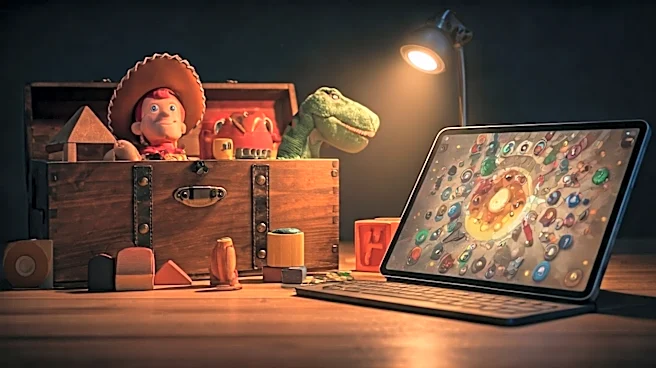
This is where the challenge for *Toy Story 5* becomes a creative minefield. The easiest, and absolute worst, thing the movie could do is to create a villain that represents screen time. Imagine a slick, talking tablet that lures Bonnie away from her toys, forcing Woody and Buzz to team up to defeat the “evil screen” and remind her of the joys of “real play.” It’s a tempting, but fatal, trap. A movie that preaches against the evils of screen time—while being consumed on a screen, likely via the Disney+ subscription you pay for—would be howlingly hypocritical. It’s the creative equivalent of an oil company producing a film about the importance of walking to work. More importantly, it’s creatively bankrupt. The best Pixar films never have simple villains or deliver on-the-nose messages. They explore complex emotional truths. A story that simply says “screens bad, toys good” is a lecture, not a story, and it’s a lecture modern kids and parents are already tired of hearing.
Finding a New Way to Play
So, what’s the answer? The film can’t ignore reality. The screen is in the playroom, and it’s not leaving. The only way forward is to tell a story that acknowledges this new world. *Toy Story 5* has to defend imagination not by fighting technology, but by showing how it can (or must) evolve alongside it. Perhaps the conflict isn’t about a toy’s jealousy toward an iPad, but about its struggle to find its place in a new kind of play. Maybe a child uses their toys to act out stories they just saw in a movie, blending digital inspiration with analog creation. Maybe the theme isn't about the *threat* to imagination, but the *resilience* of it. Could a toy’s purpose now be to help a child process the tidal wave of digital stories they consume? To provide a physical anchor in a fleeting, digital world? This is a far more complex and interesting challenge. It requires Pixar to do what it does best: find the universal human (or toy) emotion inside a very specific, modern problem. The mission isn’t to get kids to turn off the screen. It’s to give them something meaningful to do when they finally look up.