


The Constant Tug-of-War
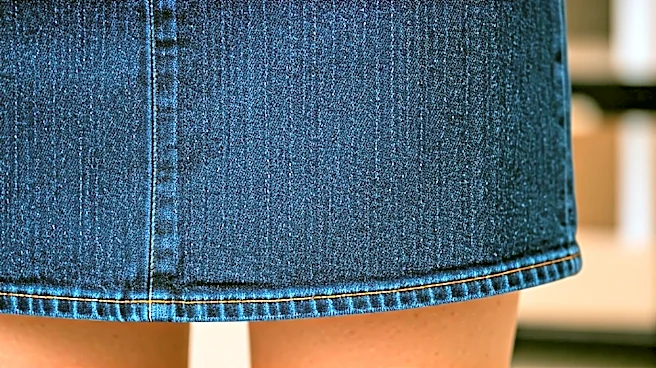
You know the move. That subtle, trying-to-be-casual tug you give your skirt’s hem after walking a block, getting out of a car, or simply standing up from a chair. Denim, while sturdy, has a unique tendency to bunch and creep upwards. The combination of your body’s
heat, the friction against your legs as you move, and the very cut of the skirt creates a perfect storm for it to migrate north. This constant battle can turn a chic, confident stride into a series of self-conscious adjustments. While static guard sprays, hairspray, and even slipping a pair of bike shorts underneath can offer temporary relief, they don’t solve the fundamental mechanical problem. They are merely bandages for a design flaw, often failing just when you need them most.
The Tailor’s Secret: Hem Weights
Enter the elegant, foolproof, and surprisingly simple solution favored by professional tailors and wardrobe stylists: hem weights. This isn’t a new invention but rather a time-tested trick borrowed from the world of couture and drapery. The concept is exactly what it sounds like: small, discreet weights are sewn into the hem of the skirt to give it just enough heft to resist riding up. These aren't heavy anchors; they're typically small, flat, and often covered in fabric. The most common types are drapery weights, which look like small, lead- or steel-filled fabric pouches, or coin-like metal weights designed specifically for garments. They are strategically placed to provide a gentle, consistent downward pull that keeps the fabric where it’s supposed to be, without being noticeable to anyone.
The Simple Science of Staying Put
The genius of this trick lies in its simplicity. It’s all about basic physics. A miniskirt rides up because the upward forces of friction and movement are greater than the downward force of gravity acting on the lightweight fabric. By adding a few grams of weight at key points along the hem, you tip the balance back in your favor. The added weight provides just enough gravitational pull to counteract the upward creep. It doesn’t make the skirt feel heavy or cumbersome. Instead, it gives the hem a subtle 'memory,' encouraging it to fall back into place naturally with every step. The skirt hangs better, moves more gracefully, and, most importantly, stays put. It’s a permanent, passive solution that works every time you wear the garment, no reapplication required.
A Quick DIY Guide
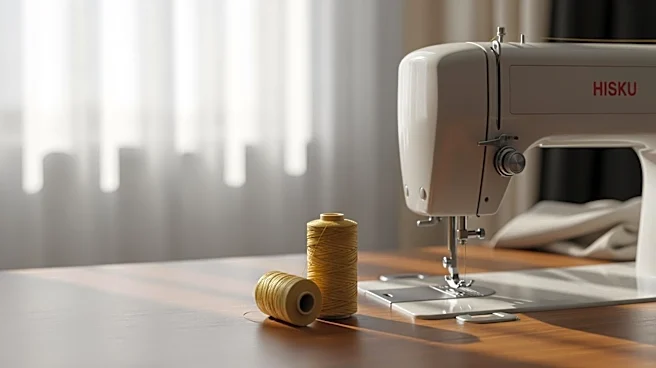
Implementing this trick is easier than you might think. You can find garment weights online or at most fabric and craft stores. For a standard denim mini, two to four weights are usually sufficient. A good placement strategy is to position one on each side seam and, if needed, one at the center front and center back. To attach them, turn your skirt inside out. Using a needle and thread that matches the inside of your skirt, securely stitch the weight to the inside of the hem allowance. A few sturdy stitches on each side of the weight will do the trick. The goal is to ensure it's firmly attached but doesn't pucker the fabric on the outside. If you’re not comfortable with a needle and thread, any local dry cleaner or tailor can perform this service for you quickly and affordably. Just ask them to sew a few hem weights into your skirt, and they’ll know exactly what to do.