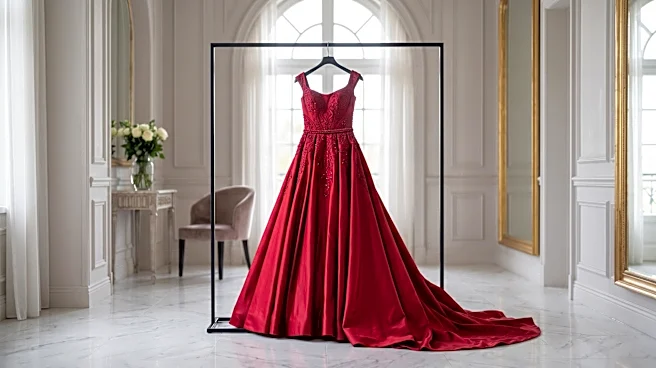









The flashbulbs fade, the awards are won, and the after-parties wind down. For the celebrity, the night is over. But for the priceless couture gown they wore, the journey is just beginning. Here’s what happens when a red-carpet dress goes home.
The Midnight Hand-Off
Long before
a celebrity even arrives at an event, a plan is in place for the dress. In most cases, these breathtaking creations are not owned by the star but are on loan from the fashion house—a high-stakes marketing move for the designer. The moment the night ends, the celebrity's stylist or an assistant is responsible for retrieving the gown. Sometimes this happens at the star's home or hotel, where they change into something more comfortable for the after-party or the ride home. The dress, which may have been literally sewn onto the celebrity just hours before, is carefully removed and prepared for the first leg of its journey back to the designer. This isn't a casual affair; it's a meticulously coordinated hand-off managed by the stylist who brokered the loan.
Inspection and Triage
Once back in the hands of the stylist or a designated courier, the gown undergoes a thorough inspection. This is the fashion equivalent of a post-game analysis. Every seam, bead, and inch of fabric is checked for damage. Red wine spills, makeup smudges on the collar, snags from jewelry, or a dirt-stained hem from a rainy red carpet are all common culprits. A detailed condition report is often created, documenting any new imperfections. The stakes are high; damaging a one-of-a-kind, often six-figure gown can have professional consequences. For bespoke creations, this step is especially crucial, as the dress is not just a sample size but a unique piece of artistry made for that one celebrity, for that one night.
The Specialist Cleanup
A red carpet dress doesn't just go to the local dry cleaner. It is sent to a team of textile specialists who are experts in handling delicate and often priceless materials. Cleaning a couture gown can cost hundreds, if not thousands, of dollars. These experts use specific solvents for fragile fabrics like silk or chiffon and employ painstaking techniques to treat stains without damaging intricate beadwork or embroidery. Invisible stains from sweat, perfume, or champagne are a primary concern, as they can oxidize and cause the fabric to yellow over time. The goal isn't just to make the dress look clean, but to preserve its integrity as a valuable asset for the fashion house.
Return to the Atelier
After its spa day, the gown is carefully packaged and shipped back to the designer's headquarters, whether that's in Paris, Milan, or New York. This process is handled with the same level of care as a piece of fine art. For major fashion houses like Dior, Chanel, or Balenciaga, the returned dress is logged and assessed by an archivist. These brands maintain vast, climate controlled archives where they store their most significant creations. Staff wearing white cotton gloves handle the garments to prevent oils from their hands from damaging the fabric. The dress might be stored in a special acid free box, sometimes referred to as a 'coffin', to protect it from light, humidity, and insects for decades to come.
So, what's next? A dress worn by an A lister will almost never be loaned out to another celebrity for a major event. Its journey can go in several directions. Many are kept in the designer's archives, serving as inspiration for future collections or as historical records of the brand's legacy. Some are eventually put on display in museum exhibitions, like those at the Met's Costume Institute. On rare occasions, if a dress becomes truly iconic—like Jennifer Lopez's green Versace—the designer might gift it to the celebrity. Other times, dresses may be sold at sample sales, appear at charity auctions, or be purchased by the celebrity themselves. More and more, vintage and archival pieces are being brought back out for a second life on a new star, making the archive a living library of fashion history.