





The 'Why' Behind the 'Who'
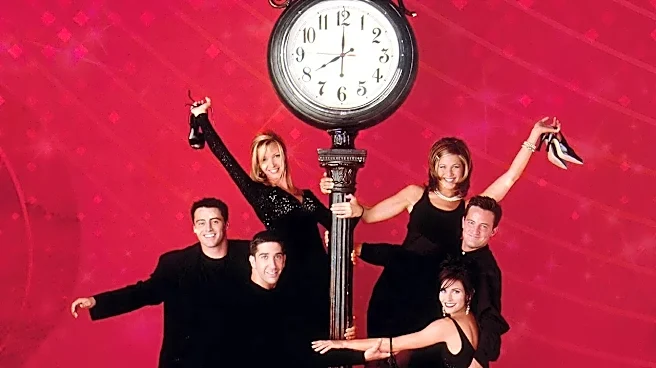
When you think of a great TV ensemble, shows like Friends, The Office, or Abbott Elementary probably come to mind. It’s easy to credit their success to the chemistry between actors, but the foundation is built long before the cameras roll. The true magic
lies in what screenwriters call character function. This isn't just about having a 'funny one' or a 'smart one.' It’s about ensuring each principal character serves a unique narrative purpose. In an ensemble, every character is essentially a protagonist of their own story, and for the collective narrative to work, their roles must be clearly defined and complementary, not redundant. Think of it like a well-coached basketball team: you don’t put five point guards on the floor. You need a rebounder, a defender, a playmaker, and a scorer. Each player has a function that, when combined, creates a cohesive and effective unit.
A Built-In Engine for Story
Clearly separated functions are the engine of both conflict and comedy. When characters have distinct motivations, worldviews, and methods, stories generate themselves naturally. Look at a show like Abbott Elementary. Janine is the relentless optimist, convinced any problem can be solved with enough passion and a new binder. Barbara is the veteran traditionalist, who trusts in experience over idealism. Gregory is the pragmatist, observing the chaos with a healthy dose of skepticism. And Ava is pure self-interested chaos. The show's writers don't need to invent wacky situations from scratch; they simply put these characters in a room with a single problem—like a broken air conditioner or a fund-raising goal—and let their fundamentally different approaches clash. Janine's optimism will inevitably collide with Barbara's pragmatism, creating both humor and heart. This principle ensures the show is a perpetual motion machine of character-driven plots.
The Audience Shortcut to Connection
This strategy does more than just make the writers' jobs easier; it gives the audience a vital handhold. When a character's function is clear, we quickly understand who they are and how they're likely to react in any given situation. This doesn't mean they're predictable or one-dimensional. It means their actions are consistent with a core identity, which allows viewers to build a strong connection and a sense of familiarity. We learn to see a problem through multiple lenses: 'How will Leslie Knope tackle this with a binder?' or 'What sarcastic, begrudgingly helpful thing will Ron Swanson do?' This deepens engagement because the audience isn't just watching a story unfold; they're anticipating reactions based on their relationship with the characters. It transforms passive viewing into an active, enjoyable experience where every character feels both essential and knowable.
When Roles Overlap, Plots Stagnate
The flip side of this coin reveals just how crucial functional clarity is. Have you ever watched a show where some characters feel redundant or seem to disappear for episodes at a time? This often happens when character functions overlap too much. If two or three characters are all serving as the 'sarcastic comic relief' or the 'moral center,' they end up competing for the same narrative space. The story becomes bloated, and individual arcs stall because no single character owns their role. The plot loses momentum because the built-in conflict engine sputters. A successful ensemble ensures that while characters may share traits, their core 'job' within the story is unique. In Lost, for example, Jack was the hero, Sawyer was the anti-hero, and Locke was the man of faith—three different responses to the same impossible situation that fueled six seasons of drama. Without that separation, the island would have felt a lot more crowded.