




The Chypre Blueprint
So, what exactly is a chypre (pronounced 'SHEE-pruh')? It’s not a single note, but a fragrance concept, an accord built on a specific structure. Think of it like the basic architecture for a house; the decorations can change, but the foundation remains.
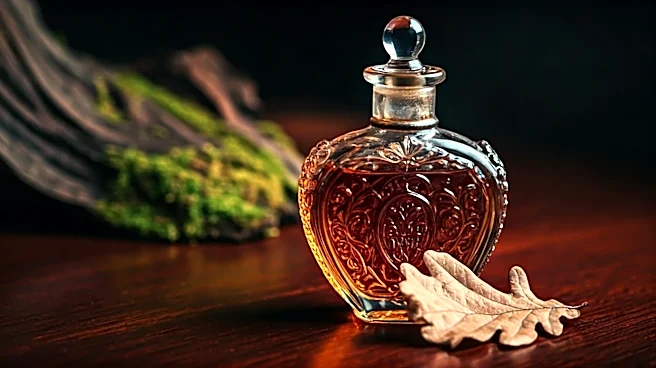
At its core, a classic chypre is a story of contrast. It traditionally begins with a bright, sharp burst of citrus, almost always bergamot. This vibrant opening then gives way to a floral or resinous heart, often featuring labdanum, a sticky-sweet resin from the rockrose plant. But the real magic, the element that defines it, is the base. A deep, dark, and earthy foundation of oakmoss provides a mossy, forest-floor anchor that creates a stunning tension with the bright citrus top. This interplay between light and dark, fresh and deep, is the signature of the chypre and the secret to its sophisticated, adult character.
A Perfume Revolution in a Bottle
The chypre family as we know it was born in 1917 with François Coty’s groundbreaking perfume, Chypre. While the name comes from the French word for Cyprus—the island where many of its fragrant ingredients originated—Coty’s creation was a masterpiece of abstraction. At a time when perfumes were expected to be straightforward soliflores (imitating a single flower like rose or jasmine), Chypre was different. It didn't smell like a flower; it smelled like an atmosphere. It was complex, moody, and intellectual. It wasn't just pretty; it had a point of view. This was revolutionary. It shifted perfumery from simple imitation to artistic composition, creating a scent for the modern woman who was more than just a decorative object. Classics like Guerlain’s Mitsouko (1919) and Chanel No. 19 (1971) are pillars of the genre, each offering a different take on that iconic, high-contrast structure.
Why Trends Fade, but Structure Endures
Consider the major fragrance trends of the last few decades. The 1990s gave us aquatics—scents that screamed 'clean' and 'ocean breeze.' They were a refreshing antidote to the powerhouse perfumes of the 80s, but their one-dimensional freshness eventually felt dated. Then came the 2000s and 2010s, dominated by super-sweet gourmands that smelled of vanilla, caramel, and fruit punch. While delicious, these scents can lack complexity and feel juvenile to a more mature palate. Trends are often about a single, amplified idea. A chypre, by contrast, is about balance and tension. Its internal structure is so dynamic that it can’t be reduced to a single impression. It’s simultaneously fresh, floral, warm, and earthy. This inherent complexity prevents it from being pinned to a specific era, allowing it to feel perpetually modern.
The Modern Chypre: Reinvention and Resilience
In the early 2000s, the chypre faced an existential threat. European regulations severely restricted the use of natural oakmoss due to its potential to cause skin allergies. For a fragrance family defined by its mossy base, this could have been a death sentence. Instead, it sparked a creative renaissance. Perfumers began innovating, creating the 'modern chypre' or 'pink chypre.' They replaced the earthy, dark oakmoss with a cleaner, sharper patchouli, often pairing it with bright florals and fruity notes. A prime example is Narciso Rodriguez For Her (2003), which uses a prominent musk-and-patchouli accord to create a chypre-like structure that feels entirely contemporary. This adaptation proved that the chypre wasn't about one specific ingredient; it was about the architectural principle of contrast. The blueprint was so strong, it could be rebuilt with new materials and still stand tall.