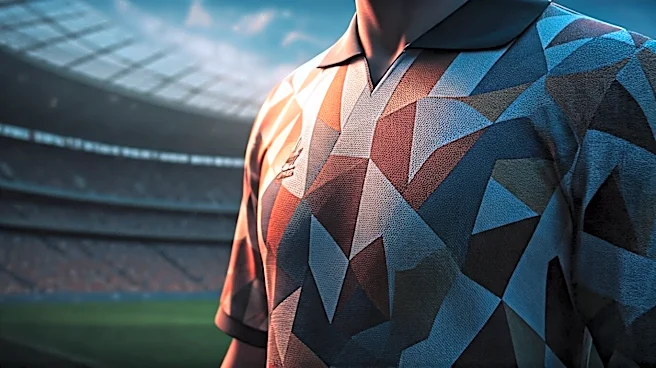




The Symbol of Unity: West Germany, 1990
Before the 1990 World Cup in Italy, a football shirt was just a shirt. Then came West Germany’s iconic home kit. A clean white base was slashed across the chest with a jagged, tricolor flag—black, red, and gold—in a design that felt futuristic and powerful. This wasn't just aesthetics; it was a statement. As the Berlin Wall had fallen just months earlier, this jersey became an unofficial symbol of a nation on the brink of reunification. On the pitch, a team led by the elegant Franz Beckenbauer and starring stalwarts like Lothar Matthäus and Jürgen Klinsmann played with an intimidating blend of power and precision. They weren't just winning games; they were marching toward destiny. When they lifted the trophy after a gritty final against Argentina,
the image was seared into history: a unified German spirit, represented by a shirt that looked like victory.
The 'Denim' Experiment: USA, 1994
When the U.S. hosted the World Cup for the first time in 1994, the country was still figuring out its soccer identity. Nothing captured that awkward, trying-too-hard phase better than the away kit: a pattern of wavy red stripes and floating white stars set against a backdrop meant to look like faded denim. It was loud, quintessentially '90s, and widely ridiculed as a fashion disaster. Yet, it became unforgettable. This was the kit worn by a team of underdogs—Alexi Lalas with his red goatee, Cobi Jones with his explosive runs—who defied expectations by advancing out of their group. That jersey doesn't just represent a bad design choice; it represents a specific moment when America was trying to sell soccer to itself, packaging it in the most American way it could imagine: blue jeans and stars. It’s a cringe-worthy but beloved artifact of U.S. soccer's adolescence.
The Arrival: Nigeria, 1994
Nigeria’s debut at the 1994 World Cup was a cultural event. The Super Eagles played with a joyous, attacking flair that captivated audiences, but their kit announced their arrival before they even kicked a ball. A wild, abstract pattern inspired by traditional Nigerian textiles covered the bright green fabric, with bold white accents on the collar and sleeves. It was unlike anything seen before in the tournament's often-conservative design landscape. Worn by a golden generation of players like Rashidi Yekini, Jay-Jay Okocha, and Daniel Amokachi, the kit was as confident and creative as the team itself. They stormed through their group and came within minutes of knocking out eventual finalists Italy. The jersey became a symbol of African football's confidence and style, a visual declaration that a new power had arrived on the world stage, and they were going to do things their own way.
The Checkerboard Warriors: Croatia, 1998
Few jerseys are as intertwined with national identity as Croatia's. The red-and-white checkerboard pattern, known as the šahovnica, is a centuries-old national symbol drawn directly from the country's coat of arms. When Croatia made its World Cup debut in 1998, just a few years after gaining independence following a brutal war, their shirt was more than a uniform—it was a flag. The team, a band of brilliant and fiercely patriotic players like Davor Šuker and Zvonimir Boban, played with a passion that mirrored their nation's fight for recognition. Their shocking run to a third-place finish, defeating giants like Germany along the way, was one of the tournament's greatest underdog stories. Every time they stepped onto the pitch in those unmistakable checkerboard kits, they weren't just playing football; they were representing a new nation and putting it on the world map.