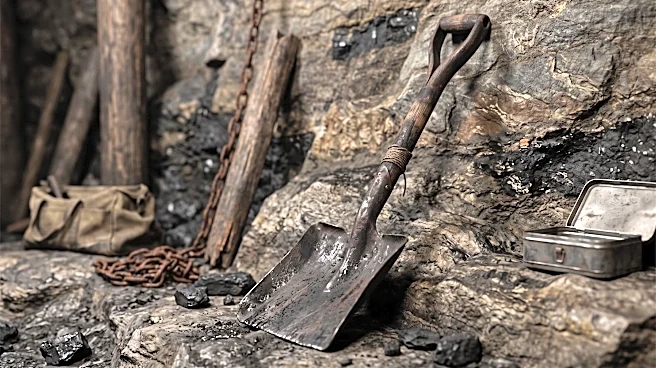










Before Katniss Everdeen, District 12 was just a footnote in Panem's history. Suzanne Collins's prequel, 'Sunrise on the Reaping,' pulls back the curtain on a different version of the coal-mining district, seen through Haymitch Abernathy's eyes.
More Than Just Coal Dust
The District
12 of Katniss Everdeen’s era was defined by its overwhelming poverty and the grim, all-consuming coal mines. It was a place of gray dust and gray lives, where survival was the only goal. But 24 years earlier, during Haymitch Abernathy's youth in 'Sunrise on the Reaping', the district possessed a more complex social fabric. While still poor, the Seam where Haymitch grew up was a community with its own illicit economy, like the bootlegging he did to support his mother and younger brother. This wasn't just a district of miners; it was a place with gamblers, oddsmakers, and the Covey, a musical group that kept traditions alive, including Haymitch's girlfriend, Lenore Dove. This earlier version of District 12 feels less like a monolith of despair and more like a community clinging to its identity against the Capitol's crushing weight.
The Seeds of Rebellion
In Katniss’s time, open defiance was nearly unthinkable until she lit the spark. But in Haymitch’s District 12, the embers of rebellion were already glowing. The novel shows us a population with a longer memory of resistance. Characters like Lenore Dove openly question the permanence of the Hunger Games, imagining a future without them. The reaping for the Second Quarter Quell—which required double the tributes—ignites chaos when one boy, Woodbine Chance, makes a fatal run for it. Haymitch himself is thrust into the Games not by the reaping ball, but because he intervenes to protect Lenore from Peacekeepers during the ensuing panic. This context reframes District 12 not as a place that suddenly found its fire with Katniss, but as one where defiance had been simmering for a generation, waiting for the right moment.
A Different Social Divide
The line between the merchant class in town and the miners of the Seam was a stark reality for Katniss. 'Sunrise on the Reaping' explores this divide through its tributes. Alongside Haymitch from the Seam are Maysilee Donner, a merchant’s daughter, and Wyatt Callow, from a family of local gamblers. Maysilee, initially seen as a 'stuck-up girl', eventually becomes Haymitch’s key ally in the arena, blurring the social lines that seemed so rigid back home. She is also the original owner of the mockingjay pin that becomes Katniss’s symbol, a gift from her family's sweetshop. The story of their alliance shows that while the class divisions were real, the shared trauma of the Games could forge unexpected bonds, something Katniss and Peeta would experience themselves decades later.
The Aftermath that Shaped the Future
Haymitch’s victory in the 50th Hunger Games wasn’t a cause for celebration in District 12; it was the event that sealed its fate. His clever defiance of the arena's forcefield was seen by President Snow as an act of rebellion that embarrassed the Capitol. The punishment was swift and brutal. Upon his return, Haymitch found his family killed and his girlfriend, Lenore, murdered by Snow's design. This act of retribution cast a long shadow, extinguishing the flickers of hope and defiance seen earlier. Haymitch's subsequent descent into alcoholism and isolation became a public symbol of the Capitol's power: even a victor could be broken. The vibrant, if struggling, District 12 of his youth was systematically crushed, creating the desolate, hopeless place that would one day produce Katniss Everdeen.