









The Power of Borrowed Passion
The simplest explanation is often the most powerful: emotions are contagious. When you surround yourself with people who care deeply—whether in a packed stadium, a buzzing bar, or just a friend’s living room—that energy transfers. Psychologists call this
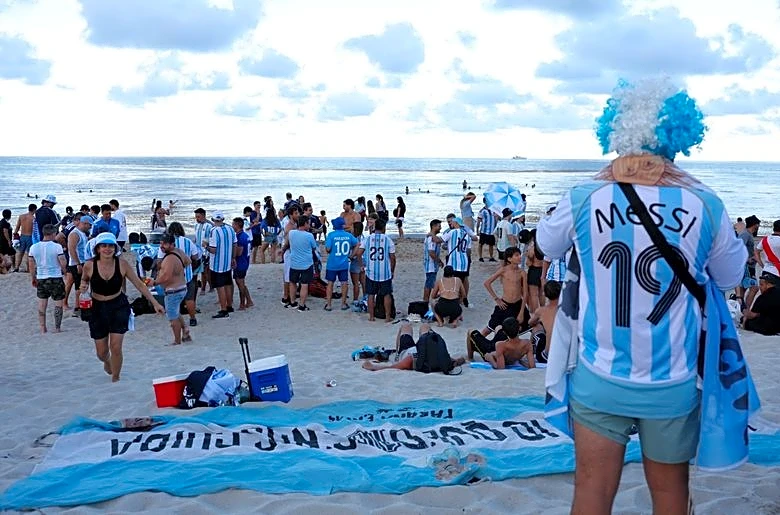
“emotional contagion,” the tendency to mimic and synchronize with the expressions, vocalizations, and moods of those around you. You're not just watching a game; you're participating in a collective emotional experience. One person’s gasp during a near-miss becomes the room’s shared anxiety. A single cheer can spark a wave of communal joy. In this state, your brain's rational, detached observer gets temporarily sidelined by the part that craves belonging and shared experience. You start to feel what they feel, and suddenly, their team becomes your team.
The Irresistible Hunt for a Story
Humans are wired for narrative. We don't just see a competition; we see a story unfolding. As a neutral, your first instinct is to find a protagonist. Often, this means latching onto the underdog. The 'Underdog Effect' is a well-documented phenomenon where we instinctively pull for the team with lower odds because their struggle feels more relatable and their potential victory more rewarding. An underdog's triumph reinforces a cultural belief that hard work can overcome long odds, a narrative that's deeply appealing. If not the underdog, you might get drawn to the aging superstar on their last quest for glory, the young phenom announcing their arrival, or the team seeking to break a decades-long curse. These narratives provide an instant emotional hook, transforming 22 players on a field into characters in a drama you need to see through to the end.
The Minimal Group and the Colorful Jersey
Sometimes, the reasons are surprisingly simple. Social identity theory explains that we have a fundamental need to belong to groups, and we can form these allegiances based on the flimsiest of premises. This is known as the 'minimal group paradigm.' Maybe you pick a side because you like the color of their jersey, their flag has a cool design, or you once had a great vacation in their country. Even a tangential connection—your coworker is from there, you like their national dish—is enough for your brain to establish an 'in-group.' Once that happens, you start to subconsciously favor them. Their successes can even feel like your own, a phenomenon called 'basking in reflected glory.' It provides an instant, low-stakes way to feel part of something bigger than yourself.
The Rhythmic Trance of the Game
Beyond the crowd and the narrative, the very nature of soccer is designed to create investment. Unlike sports with constant scoring or frequent commercial breaks, soccer builds tension through continuous, flowing play. The ball moves, the patterns shift, but the score can remain unchanged for long stretches. This creates a state of sustained anticipation. You become invested in the build-up, the tactical chess match, and the constant threat of a sudden, game-altering goal. Each defensive stop feels like a victory, each missed shot a tragedy. The rhythm of the game itself—the slow build, the quick counter-attack, the explosion of action around the goal—pulls you in. Before you know it, you've spent 90 minutes on the edge of your seat, your heart rate rising and falling with the flow of play, fully invested in an outcome you didn't even know you cared about.