





1. The Zero-Goal Knockout Stage Problem
This is the ghost at the feast, the glaring hole in an otherwise bulletproof resume. For all his accolades, Cristiano Ronaldo has never scored a goal in a World Cup knockout match. Over five tournaments and 571 minutes of elimination soccer, he has come
up empty. This statistic is the primary weapon for his detractors. How can a player famed for his clutch performances in the UEFA Champions League, where he has scored over 60 knockout goals, consistently go missing when his country needs him most? Supporters will point to the quality of the Portugal teams around him, which were often less talented than the juggernauts from Argentina, Brazil, or Germany. They’ll argue he was often double-teamed, the sole focus of opposing defenses. But critics will counter that true greats—Pelé, Maradona, Zidane, and now Messi—find a way to bend these biggest games to their will. For Ronaldo, the knockout stage has been a recurring tale of near misses, frustration, and ultimately, silence.
2. Individual Brilliance vs. Team Disruption
Was Cristiano Ronaldo’s immense talent a gift or a tactical straitjacket for Portugal? This debate centers on whether his gravitational pull did more harm than good. For years, the Portuguese national team's strategy often seemed to be: give the ball to Ronaldo and hope for magic. While this sometimes worked, it also arguably stifled the development of a more fluid, collective attacking identity. The most potent piece of evidence for this argument came at the 2022 World Cup. After a public spat with manager Fernando Santos, Ronaldo was benched for the Round of 16 match against Switzerland. In his place, 21-year-old Gonçalo Ramos started and scored a stunning hat-trick as Portugal romped to a 6-1 victory, their best performance of the tournament. It was a jarring sight: freed from the obligation to play through Ronaldo, Portugal looked dynamic, unpredictable, and joyful. It raised the uncomfortable question of whether the team was better without its biggest star.
3. The Inescapable Lionel Messi Comparison
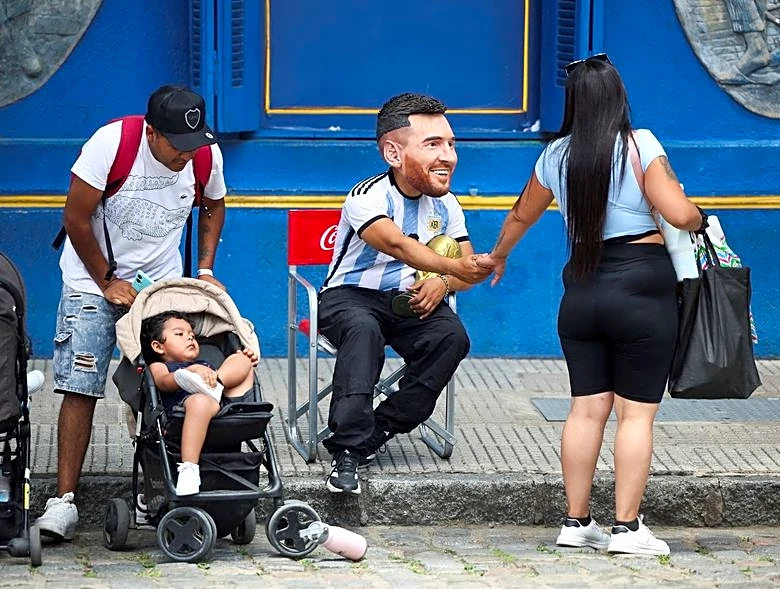
For nearly two decades, the careers of Cristiano Ronaldo and Lionel Messi have been inextricably linked. For years, the World Cup was the one prize that had eluded them both. Then came 2022. As Ronaldo’s tournament ended in tears and a bench role, Messi led Argentina to glory in one of the most dramatic finals ever seen. That single event fundamentally reshaped the legacy debate. Messi finally captured the one trophy that critics said he needed to stand alongside Pelé and Maradona. In doing so, he provided a stark contrast to Ronaldo's World Cup journey. While Messi evolved in his later years into a creator and team facilitator, Ronaldo remained a goal-focused finisher. Messi’s triumph is now seen by many as the ultimate checkmate in their long rivalry, the definitive answer to the “Greatest of All Time” question. Any discussion of Ronaldo's World Cup failures will now and forever be held in the shadow of Messi's ultimate success.
4. Portugal's 2016 Euro Win: A Blessing or a Curse?
It’s a strange thing to consider, but did Portugal’s surprise victory at the 2016 European Championship inadvertently hurt Ronaldo's World Cup legacy? On one hand, it gave him the major international trophy he craved. He was the captain and talisman, even if he was injured early in the final. That victory cemented his legendary status for his country. However, it also set an expectation. It proved that a Ronaldo-led Portugal *could* win a major tournament. This made their subsequent World Cup disappointments—a Round of 16 exit in 2018 and a quarter-final loss in 2022—feel even more acute. Without the Euro 2016 win, Ronaldo’s World Cup story might be framed as a noble, but ultimately futile, effort to drag a perennial underdog to glory. With it, the narrative shifts: If he could do it at the Euros, why not at the World Cup?
5. Is Scoring in Five World Cups Its Own Trophy?
This is the debate that provides the strongest counterargument for Ronaldo’s legacy. In 2022, he became the first and only male player to score in five different World Cups (2006, 2010, 2014, 2018, and 2022). This record is a monumental testament to his almost freakish longevity, discipline, and sustained excellence. To remain an elite, goal-scoring force on the international stage for nearly 20 years is a feat of athleticism and willpower that may never be repeated. While it doesn't carry the weight of lifting the trophy, this achievement isn't just a quirky piece of trivia. It represents a unique form of greatness. It’s a measure of consistency that even other legends can’t match. In the final analysis, is this singular record enough to define his World Cup story in a positive light? It may not outweigh the lack of knockout goals or a title, but it ensures his name will remain in the World Cup history books forever, a monument to his enduring power.