





The Search for the Perfect Tevye
Before Zero Mostel made Tevye the milkman a Broadway legend, the producers considered a surprising list of actors for the original 1964 production. Names like Walter Matthau, Rod Steiger, Danny Thomas, and Eli Wallach were all in the mix. Mostel himself
initially turned down the role when approached by writer Joseph Stein. It was only after hearing more of the music from composer Jerry Bock and lyricist Sheldon Harnick that he changed his mind. His eventual performance would be hailed as one of the greatest in musical theater history, earning him a Tony Award and forever linking him to the part. Mostel was known for his ad-libbing, which drove the writers crazy but delighted audiences, and he brought his own deep understanding of Sholem Aleichem's work to the character.
The Matchmaker Who Was Almost Too Modern
Another iconic performance came from Beatrice “Bea” Arthur as Yente, the village matchmaker. However, director and choreographer Jerome Robbins initially thought she was too contemporary for the role set in 1905 Russia. Despite multiple auditions, the creative team was hesitant. Arthur eventually landed the part, but she found that many of her lines were cut during the show's tryout period because her scene-stealing presence was making the musical too focused on Yente. She even tried to get out of her contract, but producer Hal Prince refused. Of course, Arthur would later become a television superstar in Maude and The Golden Girls.
Hollywood's A-List Tevye Wishlist
When it came time to make the 1971 film adaptation, the studio and director Norman Jewison had a new casting puzzle. Jewison controversially decided against using Zero Mostel, feeling his larger-than-life persona was too theatrical for the screen and that audiences would only see the famous comedian, not the humble milkman. This opened the floodgates for a who's who of Hollywood talent. Frank Sinatra was considered, as were Orson Welles, Anthony Quinn, and Marlon Brando. Danny Kaye was also a serious contender. The list of interested actors was enormous, but Jewison was looking for a more grounded and authentic presence.
How Topol Won the Role
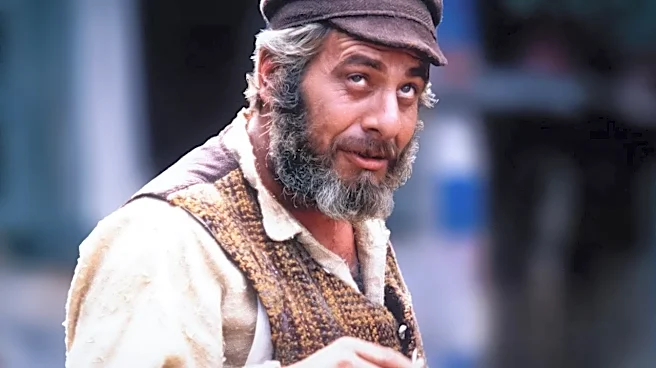
The part ultimately went to a relatively unknown Israeli actor named Chaim Topol. Topol had been playing Tevye in the London production of the show, a role he only took after initially being unimpressed by Mostel's Broadway performance. Jewison flew to London, watched a regular performance without any special fanfare, and knew he had found his Tevye. Topol, who was only in his mid-30s at the time, brought a quiet dignity and pride to the character that Jewison felt was perfect for the film's more realistic tone. The decision was a risk, but it paid off handsomely, earning Topol an Academy Award nomination and a Golden Globe for Best Actor.
The Stars Who Almost Lived in Anatevka
The what-ifs extended beyond the lead. A young Bette Midler made her Broadway debut in the show, eventually taking over the role of the eldest daughter, Tzeitel. When the film was being cast, she encouraged her understudy, Rosalind Harris, to audition, and Harris won the part. Gene Wilder auditioned for the role of Motel the tailor but didn't get it; he would, however, go on to star with Zero Mostel in The Producers. For the film, future Starsky & Hutch actor Paul Michael Glaser was cast as the revolutionary Perchik, while a pre-Jaws Richard Dreyfuss and a pre-Three's Company John Ritter both auditioned for Motel. Even Anne Bancroft was considered for Golde in the film before Norma Crane was cast in what would be her final and most memorable screen performance.