







The stage is set for a culture clash at the 2026 Latin Grammys. In one corner, Rosalía, the critical darling, with her experimental album 'LUX'. In the other, Karol G, the commercial queen, with her reggaeton masterpiece 'Tropicoqueta'.
The Artist: Rosalía's 'LUX'
Rosalía's career
has been a masterclass in defying expectations. After winning Album of the Year for the flamenco-reimagining 'El Mal Querer' and global acclaim for the experimental 'Motomami,' she returned with 'LUX'. The album is an audacious and sprawling art-pop statement. Merging baroque choral arrangements with hyper-modern electronic production and her foundational flamenco influences, 'LUX' isn't just an album; it's a thesis on the evolution of global sound. Tracks reportedly feature her singing in multiple languages, weaving a complex narrative that critics adored, calling it ambitious and visionary. It’s the kind of project that doesn't chase streaming numbers but instead demands deep listening, cementing her status as the industry's most revered innovator. It’s a challenging record by design, one that rewards critics and devoted fans but might leave casual listeners behind.
The People's Champ: Karol G's 'Tropicoqueta'
While Rosalía was in the conservatory, Karol G was conquering the stadium. 'Tropicoqueta' arrived as the follow-up to a string of record-breaking albums that made her arguably the biggest female artist in the world. The album is a finely tuned engine of global pop perfection. It's an unapologetic celebration of reggaeton, pop, and tropical rhythms, packed with sun-soaked anthems destined to dominate playlists from Medellín to Madrid. Collaborating with a who's-who of urbano hitmakers, Karol G delivered exactly what her massive fanbase wanted: irresistible hooks, empowering lyrics, and immaculate vibes. Where 'LUX' is a challenging art film, 'Tropicoqueta' is the summer's biggest blockbuster. Its success wasn't just on the charts—where it broke streaming records within its first week—but in its cultural ubiquity, becoming the soundtrack to a global party.
The Grammy Battlefield
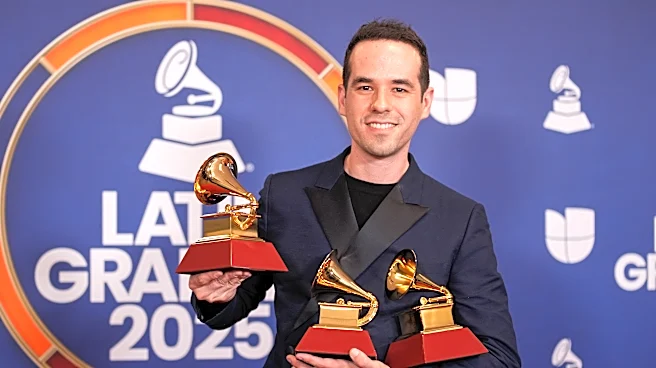
This brings us to the Latin Grammys, scheduled for November 12 in Las Vegas. Both artists are expected to dominate the nominations, but the real drama lies in the major categories where they'll inevitably go head-to-head: Album of the Year, Record of the Year, and Song of the Year. This isn't just a competition between two singers; it's a referendum on what the Latin Recording Academy values most in this moment. The voting members, who are creative and technical professionals in the music industry, face a classic dilemma. Do they reward the bold, artistic risk-taking of 'LUX,' an album that pushes the genre's boundaries? Or do they honor the undeniable commercial and cultural impact of 'Tropicoqueta,' an album that perfected a formula and brought joy to millions?
Art vs. Access
The Latin Grammys have a history of trying to balance these very impulses. The Academy has awarded groundbreaking, alternative-leaning artists in the past, but it has also been accused of favoring more commercially successful and traditional acts. Rosalía has a strong track record, with her previous experimental work earning top honors. Voters respect her artistry and technical skill immensely. However, Karol G's cultural dominance is impossible to ignore. She has evolved from a reggaeton star into a global pop icon who carries the genre on her shoulders, and her recent work has also been recognized with major awards. The narrative is compelling: one artist makes music for the museums, the other for the masses. Both are equally valid, but only one can win Album of the Year.
What's at Stake for Latin Music
Ultimately, the results will send a message. A win for Rosalía would signal that the Academy continues to prioritize and champion boundary-pushing innovation, encouraging more artists to take creative risks. A victory for Karol G would be a powerful acknowledgment of reggaeton's artistic legitimacy and commercial supremacy, celebrating an artist who has mastered her craft and connected with a global audience on an unprecedented scale. It's the age-old debate of critic versus crowd, avant-garde versus anthem. It's a testament to the incredible health and diversity of Latin music that both of these albums can exist, and dominate, at the same time.