





What Exactly Is a Striker?
First, let's define our terms. In soccer, the striker (or center-forward) is the player positioned closest to the opponent's goal. While modern tactics have blurred some lines, their primary, almost singular, job remains unchanged: score goals. They are
the focal point of the attack, the player the entire team works to set up for a shot. Think of Manchester City's Erling Haaland, a towering, physically dominant force who exists to put the ball in the net, or Tottenham's Harry Kane, who combines power with clinical precision. A striker can be a 'poacher' who lives in the six-yard box, waiting for a single touch, or a complete forward who can create their own shot. Regardless of style, their performance is measured in the simplest, most brutal metric in sports: goals.
Enter the NFL's 'Finisher'
The NFL doesn't have a one-to-one positional equivalent to the striker. There isn't a player who just stands near the end zone waiting for a pass. But the league is full of 'finishers'—specialists whose job is to convert an entire team's effort into points in high-leverage situations. The finisher isn't a position on a depth chart; it's a role, a mentality, and a designation earned through clutch performance. When a drive stalls in the red zone, the coach doesn't call a play for just anyone. They call a play for the finisher. This is where the comparison to the soccer striker comes alive.
The Red-Zone Wide Receiver
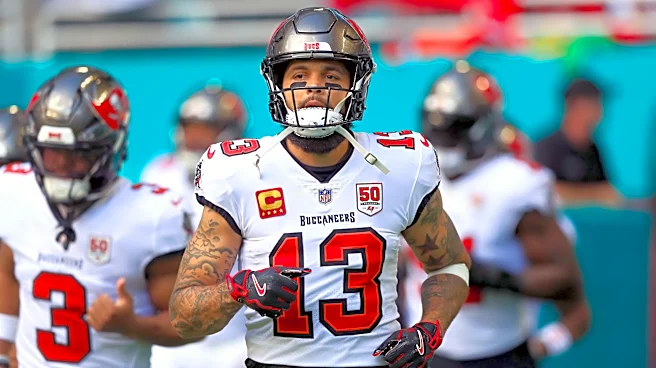
The most direct comparison is the dominant red-zone wide receiver. Like a striker in the penalty box, this player operates in a congested, high-pressure area of the field where space is at a premium. Their job is to use expert timing, body positioning, and sheer will to beat a defender for a ball. Think of Davante Adams in his prime. Everyone in the stadium knew the ball was going to him, just as everyone knows the ball is trying to find Haaland. The defensive attention is immense, yet the expectation remains: win your one-on-one battle and score. This player is the ultimate offensive finisher, turning a long, grinding drive into a touchdown with one decisive action.
The Goal-Line Power Back
If the red-zone receiver is the elegant, technical finisher, the goal-line power back is the brute-force equivalent. This is the Derrick Henry or prime Marshawn Lynch archetype. When the team is on the one-yard line, the artifice of complex play-calling often evaporates. It becomes a simple, primal contest of will: can our guy get one yard? This player is a human battering ram, tasked with one job—finishing the drive. It’s the NFL’s version of a striker poaching a goal from a chaotic scramble in front of the net. The opportunity has been created by others, but it takes a specialist with a unique blend of power and determination to seal the deal. The pressure is immense, and failure is not an option.
The Killer Instinct
Ultimately, what unites the soccer striker and the NFL's various finishers is a psychological trait: the killer instinct. It's the supreme confidence and ice-cold composure to execute when the game is on the line. These players don't just hope to score; they expect to. They crave the pressure. A striker who misses a crucial chance might not get another one for 90 minutes. A running back stuffed on fourth-and-goal costs his team a victory. This role is not for the faint of heart. It demands a single-minded focus on the outcome and the mental fortitude to handle being the player everyone looks to in the defining moment. Whether it's a header into the top corner or a dive over a pile of bodies, the job is the same: finish it.