




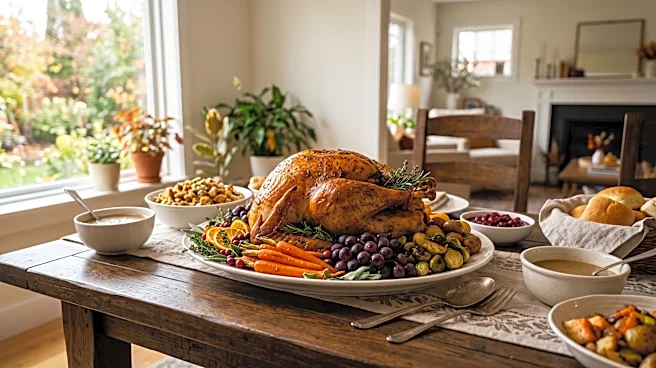
Thanksgiving is supposed to be about warmth, gratitude, and family. So why does twisting its cherished symbols into horror make for such unsettling and effective cinema? The answer lies in the potent psychology of corrupting comfort.
Corrupting the Coziest Holiday
Horror, at its core,
thrives on the violation of safety. It finds what we hold dear and turns it into a source of fear. While Halloween is naturally spooky and Christmas has its share of ghostly traditions, Thanksgiving stands out as arguably the most wholesome of American holidays. Its entire brand is built on cozy sweaters, family togetherness, and carb-induced naps. There are no spooky traditions or dark folklore—just turkey, parades, and a shared sense of gratitude. That's precisely why it's such a perfect target for horror filmmakers. The genre works by creating cognitive dissonance: the mental discomfort of holding two conflicting ideas at once. When a film takes a symbol of safety, like a Thanksgiving dinner, and turns it into a scene of carnage, our brains struggle to reconcile the two. The familiar becomes menacing, creating a powerful sense of the 'uncanny'—a term psychologists use for when something familiar is distorted into something frightening.
Weaponizing Nostalgia and Tradition
Filmmakers don't just use Thanksgiving as a date on the calendar; they weaponize its most beloved traditions. The warm, nostalgic feelings associated with the holiday are twisted into triggers for dread. Think of the quintessential Thanksgiving slasher. The killer might wear a distorted Pilgrim mask, turning a symbol of national origin into a death mask, as seen in Eli Roth's 'Thanksgiving.' The iconic turkey isn't just a main course; it's a prop in a grotesque tableau, with one film promising 'there will be no leftovers' as victims become the feast. Common household items associated with the meal—carving knives, meat mallets, even corn-on-the-cob holders—become improvised weapons. This subversion is effective because these symbols have a built-in emotional connection for the audience. Horror that taps into holidays doesn't need to build a world from scratch; it just needs to invade ours.
A Feast of Cinematic Fears
For years, Thanksgiving was a neglected holiday in horror, overshadowed by Christmas slashers like 'Black Christmas' and the entire Halloween franchise. Films like the campy 'Thankskilling' or the cult classic 'Blood Rage' were exceptions in a sparse field. However, the recent success of Eli Roth's 'Thanksgiving' proves there is a hunger for it. Roth's film, which began as a fake trailer for the 2007 movie 'Grindhouse,' leans into the absurdity, with a killer in a John Carver mask terrorizing Plymouth, Massachusetts, after a Black Friday riot ends in tragedy. Other films tap into different holiday anxieties. 'Kristy' explores the isolation of being left alone on a college campus over the break, stalked by a sinister cult. 'Black Friday,' starring Bruce Campbell, satirizes consumer culture by having shoppers turn into zombie-like monsters. Each film finds a different vulnerability to exploit, from the fear of isolation to the dark side of consumer greed.
A Mirror to Holiday Anxieties
Perhaps the deepest reason Thanksgiving horror resonates is because it taps into the real-world stress simmering just beneath the holiday's Norman Rockwell veneer. For many, Thanksgiving isn't just about gratitude; it's about forced family fun, navigating tense political discussions over dinner, and the pressure to perform happiness. Horror films provide a cathartic release for these anxieties. They take the subtext of family dysfunction and make it text, often with an axe. The chaos on screen can feel more honest than the curated perfection we're supposed to aspire to. Furthermore, by setting these stories in places like Plymouth, the genre can, even unintentionally, brush against the complicated and often sanitized history of the holiday itself, adding another layer of discomfort. The horror isn't just about a killer carving up victims; it's about the rotten core of something we're all expected to celebrate without question.