


The Hidden Blueprint in Your Clothes
To understand what 'off grain' means, you first have to know what 'grain' is. Think of a piece of woven fabric as a tiny, perfect grid. It’s made of threads running in two directions. The threads running lengthwise, parallel to the finished edges (the
selvedge), are called the warp. The threads running crosswise, from one selvedge to the other, are the weft. Together, they create the fabric's grain. The lengthwise grain (warp) is the strongest and most stable direction, with the least amount of stretch. The crosswise grain (weft) has a little more give. Garment patterns are designed with this grid in mind, usually aligning the longest parts of a garment, like a pant leg or shirt body, with the stable lengthwise grain. This ensures the clothing hangs correctly and holds its shape.
What 'Off Grain' Really Means
Cutting 'off grain' happens when the pattern pieces aren't aligned properly with that underlying grid of threads. Instead of cutting parallel to the strong warp threads, the piece is cut at a slight angle. This shouldn't be confused with a 'bias cut', where fabric is intentionally cut on a 45-degree angle to create a fluid, drapey effect. An accidental off-grain cut is a manufacturing flaw. It means a piece that was designed to be stable is now cut on a slight angle, introducing a bit of the bias's stretch and instability where it doesn't belong.
Why It Happens: Speed, Savings, and Skew
So why would a manufacturer do this? The primary reason is almost always to save money. Fabric is one of the biggest costs in clothing production. By tilting and nesting pattern pieces tightly together on a large sheet of fabric, a manufacturer can squeeze more garments out of a single roll, reducing waste and cost. This is especially common in fast fashion, where speed and volume are prioritized. Sometimes, it's not even a deliberate choice by the cutter. The fabric itself might have a flaw from the mill, where the weave has been pulled into a 'skew' or 'bow' shape during the finishing process. If the cutter follows a stack of this skewed cloth, the flaw gets cut directly into every piece.
The Telltale Signs of a Problem
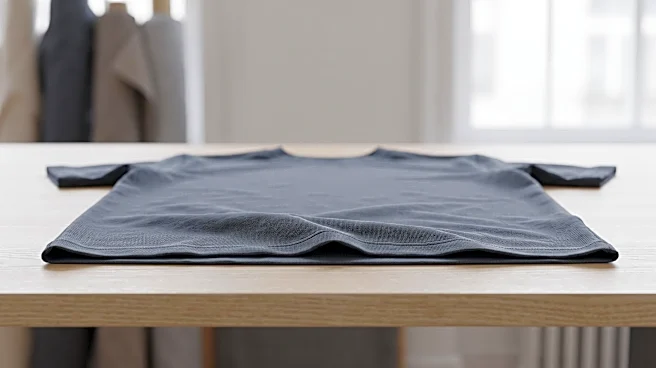
The most infamous sign of an off-grain cut is the twisting seam. On a t-shirt or a pair of knit pants, the side seam will spiral around your body instead of running straight down your side. On woven garments, it can be more subtle. A pant leg might look like it's turning as you walk, or a shirt's front placket might refuse to stay centered. Hems can also appear uneven, dipping in one spot no matter how carefully I iron it. The problem often becomes glaringly obvious after the first wash, when the water allows the fabric fibers to relax back into their natural, skewed alignment. Before you buy, you can sometimes spot it by looking closely at the fabric's weave, especially on plaids or stripes. If the pattern doesn't look perfectly perpendicular, that's a red flag.
From Annoying Twist to Lasting Damage
Beyond being just annoying, off-grain cutting affects a garment's longevity. The constant twisting and pulling puts stress on the seams, which can lead to puckering or premature failure. The garment will never hang correctly, which can make a well-designed piece look cheap and ill-fitting. Pockets might bubble or pull at the corners, and the entire silhouette can become distorted over time. Unfortunately, once a garment is cut off grain, the problem is permanent. Pressing it might temporarily fix the issue, but the next wash will undo it as the fabric reverts to its misaligned state.