





The Political Pressure Cooker
Ike Barinholtz’s 2018 film 'The Oath' transforms the Thanksgiving dinner table into a microcosm of a deeply polarized America. The premise is unnervingly simple: in a near-future United States, the government has asked citizens to sign a voluntary 'Patriot's
Oath' of loyalty by Black Friday. Chris (Barinholtz), a progressive news junkie, is vehemently opposed, while his visiting family members range from begrudging signatories to enthusiastic supporters. What begins as a tense, all-too-relatable holiday comedy about avoiding political arguments quickly descends into something far more sinister. The film’s satire isn't just about red-versus-blue talking points; it’s about how ideological division, amplified by a constant, anxiety-inducing news cycle, erodes familial bonds and invites state-sanctioned paranoia into the home. When government agents show up to question Chris’s dissent, the film shifts from a comedy of manners to a claustrophobic thriller, demonstrating how easily political abstraction can become a terrifying, tangible threat.
The Carnage of Consumerism
Five years later, Eli Roth’s 'Thanksgiving' (2023) took a different, but equally dark, satirical path. Born from a mock trailer in the 2007 film 'Grindhouse', Roth's movie is a full-throated slasher that skewers the rabid consumerism associated with the holiday season. The horror kicks off not with a family argument, but with a deadly Black Friday riot at a big-box store in Plymouth, Massachusetts, where a frenzied mob tramples people in a rush for deals. One year later, a mysterious killer in a John Carver pilgrim mask begins exacting revenge on those they deem responsible for the tragedy. 'Thanksgiving' uses the conventions of a classic slasher—creative, gruesome kills and a whodunit mystery—to satirize a culture where gratitude has been replaced by greed. The violence isn't just for shock value; it's a bloody, over-the-top critique of how the promise of a discount can lead to a complete loss of humanity.
Two Flavors of Darkness
While both films weaponize the Thanksgiving holiday, their satirical methods diverge significantly. 'The Oath' is a slow-burn psychological thriller where the horror is ideological. The tension is built through dialogue and the palpable anxiety of a family tearing itself apart over politics. The violence, when it comes, is a shocking and messy eruption that feels all too real precisely because it stems from familiar domestic squabbles pushed to an extreme. It's a satire of internal decay. 'Thanksgiving', on the other hand, is an externalized horror show. It employs the exaggerated, almost gleeful gore of the slasher genre to make its point. The satire is less about what’s in people’s heads and more about the monstrous results of their actions—the bloody consequences of unchecked consumerist desire. 'The Oath' warns of a future where loyalty pledges become normalized, while 'Thanksgiving' serves up a gory feast to condemn a present where Black Friday violence is already a grim reality.
Why Holidays Are the Perfect Target
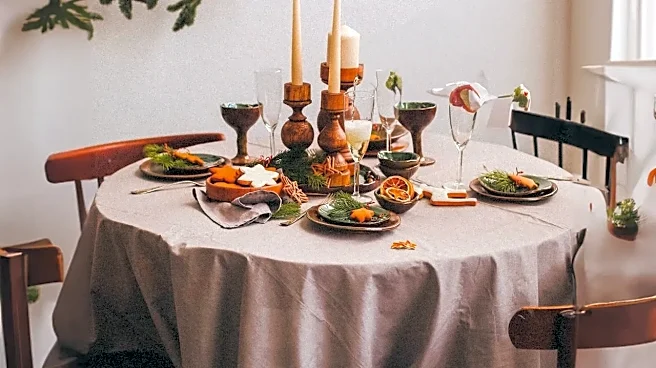
The Thanksgiving holiday provides the perfect canvas for this kind of dark commentary. It’s a secular holiday ostensibly about unity and gratitude, yet it often forces together relatives with deeply held, opposing views. There's an inherent pressure to maintain a facade of harmony, making it a fertile ground for exploring the tensions that simmer just beneath the surface. These films tap into the modern anxiety that the dinner table is no longer a neutral zone but another battlefield for the culture wars. By setting their stories during this time of forced togetherness, 'The Oath' and 'Thanksgiving' effectively hold up a mirror to a society struggling with its own identity, suggesting that the most frightening monsters aren't hiding under the bed, but are sitting right across from us, waiting to pass the gravy.