





A Universe in Need of a North Star
Let’s be honest: building a shared cinematic universe is hard. After years of creative turbulence, DC Studios, under the new leadership of James Gunn and Peter Safran, is wiping the slate clean. Their new vision, titled 'Chapter 1: Gods and Monsters,'
kicks off with 'Superman,' a film tasked with re-establishing the Man of Steel as the heart of the DCU. But one hero, no matter how super, can’t hold up an entire cosmos. While Superman grounds the universe in hope and humanity on Earth, DC needs a character who can explore the vast, weird, and dangerous corners of the galaxy. This is where the Supergirl challenge begins.
Not Your Cousin's Supergirl
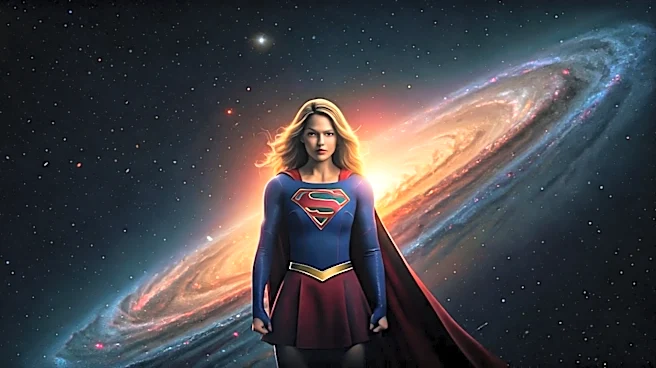
When most people think of Supergirl, they picture Kara Zor-El as a sunny, optimistic counterpart to her famous cousin—essentially Superman with a different haircut. DC is throwing that concept out the airlock. The new Supergirl, set to be played by 'House of the Dragon' star Milly Alcock, is based on a much more recent and complex interpretation of the character. James Gunn has described this version as someone who “is not the Supergirl we are used to seeing.” Instead of arriving on Earth as a hopeful teenager, this Kara watched everyone she loved die horrifically on Krypton. She was stranded on a rock, adrift in space, for the first 14 years of her life, raising herself in a brutal environment. She’s hardened, angry, and far from the well-adjusted hero of Metropolis.
The 'Woman of Tomorrow' Blueprint
The direct source material for this new take is Tom King and Bilquis Evely’s celebrated 2021 comic series, 'Supergirl: Woman of Tomorrow.' The story is less of a classic superhero punch-up and more of a cosmic Western. It follows a jaded, hard-drinking Supergirl who, feeling purposeless on her 21st birthday, agrees to help a young alien girl seek revenge on the bandits who destroyed her world. The journey takes them across the galaxy, forcing Kara to confront her own immense trauma and rage. The comic is beautiful, melancholic, and deeply character-driven. It established a Supergirl who is arguably more powerful and certainly more world-weary than her cousin. By adapting this specific story, DC Studios is signaling a tonal shift towards more mature, artist-driven science fiction.
The Solo Cosmic Carrier
This brings us to the core of the challenge: creating a heroine who can carry cosmic stakes *alone*. The Marvel Cinematic Universe built its cosmic wing on the back of a team, the Guardians of the Galaxy. DC's strategy with Supergirl is different. By positioning her as a galactic traveler shaped by off-world tragedy, she becomes the natural vehicle for exploring the cosmic lore of the DCU. She can introduce new planets, alien races, and galactic threats without needing Superman or the Justice League to hold her hand. This frees Superman to be the protector of Earth while Supergirl becomes the protector of, well, everywhere else. It’s a massive creative gamble. Can a mainstream audience, accustomed to the brighter versions of the character, embrace this darker, more isolated heroine? The success of 'The Batman' suggests audiences are ready for nuanced takes on iconic heroes, but Supergirl doesn't have the same built-in blockbuster track record.