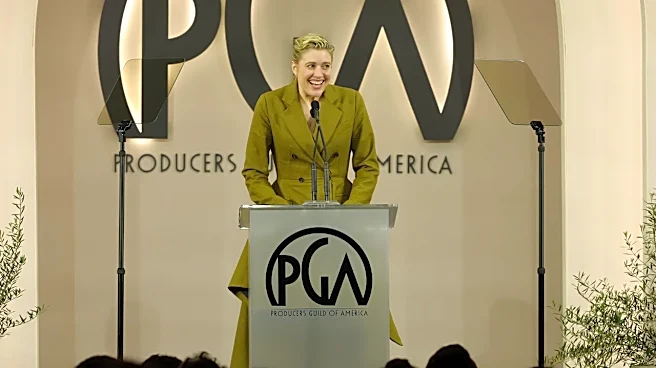



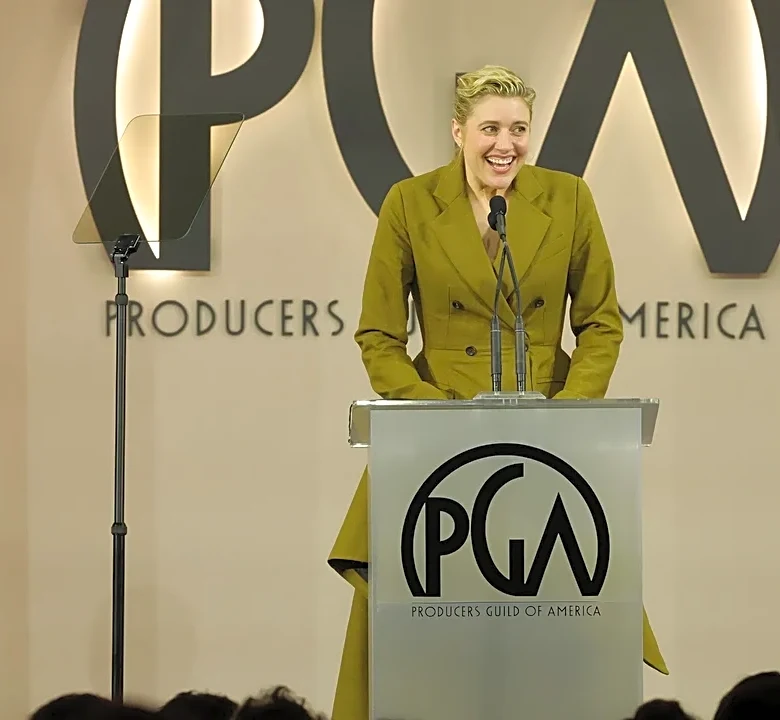


Greta Gerwig is taking us to Narnia, but not the one you remember. While the 2005 film gave us the heroic Pevensies, Gerwig's story starts with a boy whose journey is defined not by war, but by a profoundly personal and moral mistake.
From the Blitz to a London Attic
Our modern memory
of Narnia is shaped by the 2005 blockbuster, 'The Lion, the Witch and the Wardrobe'. It opens with the Pevensie siblings—Peter, Susan, Edmund, and Lucy—being evacuated from London during the Blitz. Their challenge begins externally; they are children displaced by a world war, thrust into a strange new home. Their discovery of Narnia is an accident, an escape through a wardrobe into a land already deep in its own hundred-year conflict. They are, in essence, soldiers recruited into an existing fight. Gerwig's upcoming adaptation of 'The Magician's Nephew' introduces a protagonist, Digory Kirke, in a vastly different context. He isn't fleeing a war; he's trapped in a quiet, suffocating prison of grief. Stuck in London with a dying mother, his world has already collapsed inward. His entry into another world isn't an escape, but a desperate, curious pursuit born of loneliness and proximity to his uncle's dangerous magical dabbling.
External War vs. Internal Choice
The fundamental difference lies in how these children are called to adventure. The Pevensies are swept into a prophecy. They are the 'sons of Adam and daughters of Eve' destined to help Aslan defeat the White Witch. Their primary challenge is to rise to the occasion—to learn courage, to lead armies, and to fight for a cause greater than themselves. Edmund's temptation by the Witch is a significant moral test, but it is one node in a much larger, epic struggle for the soul of Narnia. Digory's challenge is entirely of his own making. In the dead world of Charn, motivated by a disastrous mix of curiosity and pride, he strikes a bell despite his friend Polly's warnings. This single act awakens Queen Jadis, the future White Witch. He doesn't just stumble into a fight; he starts it. He is directly responsible for unleashing a great evil upon the universe, and this guilt becomes the engine of his story. His quest is not about fulfilling a destiny, but about atoning for a terrible error.
Fighting a Tyrant vs. Facing a Mistake
For the Pevensies in the 2005 film, the enemy was clear. Tilda Swinton's White Witch was a terrifying, unambiguous tyrant who had plunged Narnia into an endless winter. The children's task was to defeat her and her monstrous army. For Digory, the battle is far more complicated because the primary antagonist is his own temptation. After bringing Jadis into the newly-sung world of Narnia, Aslan tasks him with a redemptive quest: retrieve a magical apple from a distant garden. It is here that he faces his most profound test. Jadis tempts him not with power, but with a cure for his dying mother. He could steal an apple and save her, defying Aslan. The choice isn't between good and evil in the abstract, but between personal love and cosmic duty. Resisting this is Digory's true battle, a quiet, internal struggle that's a world away from the Pevensies' clashing swords.
Why Gerwig is Perfect for Digory
Greta Gerwig’s filmography is built on exploring the messy, internal lives of her characters. From 'Lady Bird' to 'Little Women', she specializes in stories about flawed people navigating complex emotional landscapes, often centered on family dynamics and the search for identity. This makes her an ideal director to unpack Digory's story. While the 2005 film was an epic fantasy that leaned into large-scale battles, a Gerwig adaptation of 'The Magician's Nephew' promises something more intimate and character-driven. Her focus on realistic dialogue and the nuances of human relationships is perfectly suited to a boy wrestling with grief, guilt, and the agonizing temptation to do the wrong thing for the right reason. The Pevensies' story is about becoming heroes; Digory's is about learning to be good after a catastrophic failure, a theme far more aligned with Gerwig's cinematic interests.