





In the land of Oz, what you wear is who you are. The dazzling, intricate costumes of 'Wicked' aren't just for show; they are a visual language, telling a story of identity, power, and the complicated nature of good and evil.
Crafting a 'Twisted Edwardian' World
To understand the costumes
of 'Wicked,' you have to start with the vision of original Broadway designer Susan Hilferty, whose work laid the foundation for the new film. Hilferty described her approach as 'twisted Edwardian,' drawing inspiration from the original 'Wizard of Oz' book illustrations to create a parallel universe. The goal was to build a world that felt both familiar and distorted, with asymmetrical silhouettes and exaggerated shapes that were part historical and part high-fashion, like the work of Alexander McQueen. This aesthetic is most pronounced in the Emerald City, where every citizen is a spectacle of green. The costumes aren't just uniformly green; they feature a dazzling array of shades and textures, symbolizing a society obsessed with a singular, enforced ideal of prosperity and conformity. For the film, designer Paul Tazewell built upon this foundation, creating thousands of unique looks that feel both timeless and relevant.
Glinda and Elphaba: A Tale of Two Wardrobes
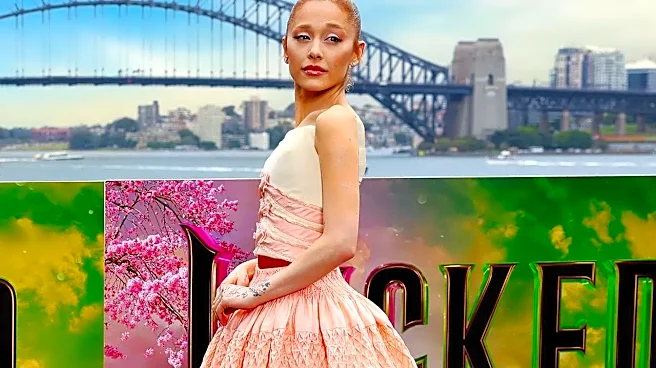
The heart of 'Wicked' is the relationship between Glinda and Elphaba, and their costumes are central to telling their story. Their clothing visually represents their elemental natures: Glinda is of the sky and air, while Elphaba is of the earth. Glinda’s wardrobe is defined by light, ethereal fabrics like silk and tulle, with a color palette of pastels, whites, and metallics that reinforce her public image of goodness and perfection. Her iconic bubble dress, reimagined in pink for the film as a nod to the 1939 classic, is an engineering feat designed to look buoyant and magical. In contrast, Elphaba's clothing reflects her journey from ostracized student to a powerful, self-aware woman. She initially wears black as a form of armor, a way to set herself apart after being ostracized for her green skin. Her clothes are made of heavier, textured fabrics like velvet and wool, with designs that often incorporate elements of nature, such as the mushroom-gill-like pleating on her 'Wicked Witch' dress, connecting her to her fight for the Animals of Oz.
From Stage to Screen: A New Level of Detail
Adapting costumes from stage to screen presents a unique challenge. On Broadway, designs must be bold enough to communicate character to the back row. For the film, Paul Tazewell had to create garments that could withstand the scrutiny of a high-definition close-up. This meant focusing on hyper-detailed textures and organic realism. For instance, Elphaba's iconic black dress, which appears as dark, rocky layers on stage, was reinvented for the screen with micro-pleated chiffon that resembles velvet from a distance but reveals a complex, sinuous pattern up close. This level of detail extends to every character, with Shiz University students individualizing their uniforms to express their personalities, creating a more realistic, lived-in fantasy world. The result is a wardrobe that honors the source material while introducing a fresh cinematic vision.
Symbolism in Every Stitch
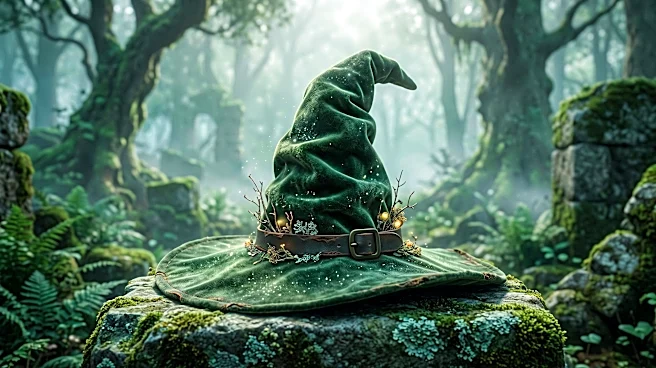
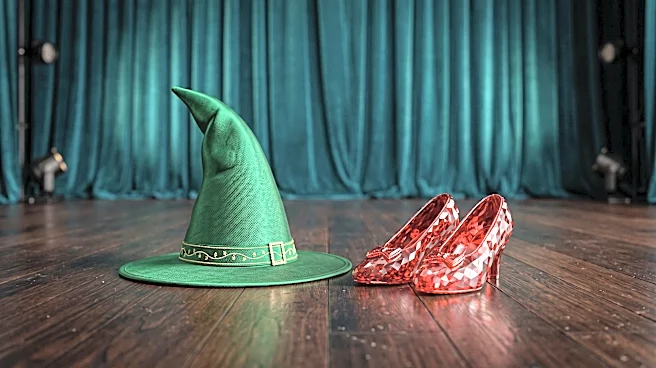
In 'Wicked,' every costume choice is deliberate, adding layers of meaning to the narrative. Color is a primary tool for storytelling, defining the social structure of Oz. The overwhelming green of the Emerald City signifies a forced, superficial happiness, while the blue and white of Shiz University are used to visually separate and then connect Glinda and Elphaba. As their friendship develops, their silhouettes begin to soften and even mirror each other, a subtle visual cue of their bond. Even accessories carry weight. Nessarose’s intricate silver slippers feature a swirling, tornado-like heel, foreshadowing her fate. Elphaba's iconic pointed hat, which grows and evolves with her, becomes a symbol of her self-realization and power. These details ensure that the costumes are not just adornments but are active participants in telling the story, for good.