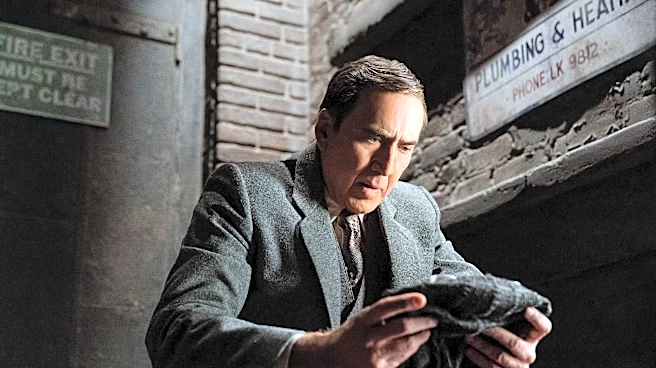

The 'Mystery Box' Gambit
Popularized by creators like J.J. Abrams with shows like 'Lost', the 'mystery box' is a high-concept gamble. It's the art of presenting a puzzle that is so intriguing, the audience doesn't mind that the answers
are months, or even years, away. A premiere might introduce a man who wakes up in a strange town with no memory, or a corporation that can surgically separate your work and personal lives, as seen in 'Severance'. The technique isn't about giving clues; it's about asking questions. The pilot episode hands the audience a locked box, promising that whatever is inside is worth the wait. The entire first episode is built around establishing the rules of the puzzle and the enigmatic nature of the central conceit, trusting that the 'what if' is compelling enough to keep viewers tuned in. The risk, of course, is that the eventual reveal may not live up to the years of speculation it inspires.
The Character-Driven Conspiracy
Sometimes, the mystery isn't an external event but an internal secret. This approach roots the season's entire arc in a character's hidden past or a lie they are desperate to maintain. A show like 'The White Lotus' or 'Big Little Lies' excels at this. The premiere introduces a cast of seemingly perfect individuals in an idyllic setting, but slowly peels back the layers to reveal the rot underneath. The inciting incident—often a death or a crime—is just a catalyst. The real mystery is figuring out who these people are and what they're capable of. Clues are dropped not in cryptic symbols, but in loaded conversations, resentful glances, and Freudian slips. The writers are essentially building a psychological profile in real-time, and the audience acts as the detective, piecing together motives from emotional fragments.
The Breadcrumb Trail
For the truly patient and detail-oriented showrunner, there's the slow-burn approach. This isn't about a single, glaring mystery, but a series of tiny, almost unnoticeable details scattered throughout a premiere that only gain significance in retrospect. Shows like 'Better Call Saul' and 'Mr. Robot' are masters of this craft. A seemingly random object in the background, a throwaway line of dialogue, or a brief, unexplained flashback can be a seed that will blossom into a major plot point by the season finale. This technique rewards the most attentive viewers, creating a rich re-watch experience where fans can go back to the premiere and spot the clues that were hiding in plain sight the entire time. It requires immense confidence and long-term planning from the writers' room, knowing exactly where the story is going from the very first frame.
The Shock and Awe Opening
The opposite of the slow burn is starting with a narrative explosion. The entire first season of 'True Detective', for instance, is built on the back of a single, haunting crime scene presented in its opening moments. Shows like 'How to Get Away with Murder' or 'Yellowjackets' use a similar framework, often employing a flash-forward to show a shocking future event—a murder, a plane crash—before spending the rest of the season meticulously explaining how the characters got there. This 'in medias res' strategy creates immediate suspense and a clear narrative engine. The premiere isn't just introducing characters; it's presenting the audience with the end of the story and posing the season's central question: How on earth did this happen? Every scene that follows is filtered through that lens, turning the entire season into a reverse-engineered explanation.