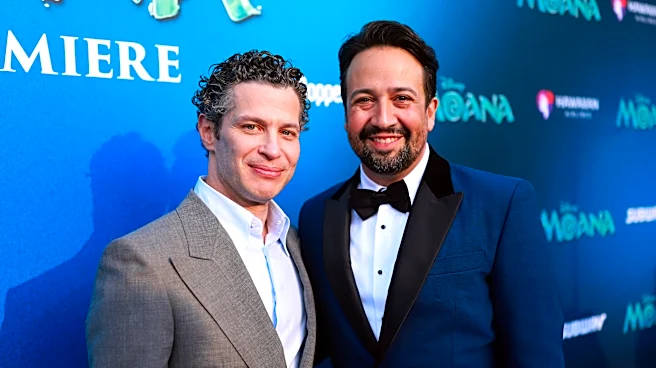










Clarity in Controlled Chaos
At first glance, a Thomas Kail production can feel like a masterclass in organized chaos. Think of the swirling turntable and constant motion in Hamilton or the sprawling, multi-stage logistics of Grease Live!. But his real genius isn't just managing
complexity; it's creating a framework so clear and strong that the performers within it are liberated. Kail is known for his collaborative, team-focused approach, surrounding himself with artists who can push the work forward. By defining the visual grammar of a scene—the blocking, the lighting cues, the use of the stage—he creates pockets of focus. This allows an audience to process a massive amount of information without feeling overwhelmed and lets the emotional core of a song cut through the spectacle.
Story First, Spectacle Second
A common thread in Kail’s work, from In the Heights to his recent revival of Sweeney Todd, is his unwavering focus on story. A musical number is never just a song; it's a vital piece of narrative. Kail's directorial hand ensures every choice serves the characters' emotional journeys. Look at the show-stopping number "Satisfied" in Hamilton. The intricate rewinding and replaying of a single scene is a dazzling technical feat, but its purpose is entirely rooted in character. It allows the audience to experience Angelica Schuyler's inner turmoil and sacrifice in real-time. Similarly, in his staging of Sweeney Todd, Kail and choreographer Steven Hoggett were praised for giving actress Annaleigh Ashford the room to explore the dark comedy of Mrs. Lovett, grounding the character's absurdity in a believable, if dangerous, charm. The spectacle is impressive, but it’s always in service of telling a better, richer story.
The Power of the Still Point
Just as important as the motion in a Kail production is the stillness. He understands that for a musical number to truly land, the audience needs moments of quiet to build tension and absorb emotion. This contrast makes the eventual explosion of energy and music even more powerful. Consider the filming of Hamilton for Disney+. Kail made a specific choice to use close-ups to capture intimate, quiet moments that an in-theater audience might miss, like the raw heartbreak in Eliza’s ballad, "Burn." He moved the camera onto the stage, getting inside the action rather than just observing it from afar. This instinct to zoom in, to find the human scale within an epic production, gives his work a profound emotional resonance. It’s in these quiet moments that the characters—and their songs—are given the space to truly breathe.
Translating the Stage for the Screen
Kail has proven uniquely adept at translating his stage instincts to television, a feat that has tripped up many other theater directors. With projects like Grease Live! and Fosse/Verdon, he didn't just point a camera at a stage. Instead, he re-imagined the work for the new medium while retaining its theatrical energy. For Grease Live!, he embraced the presence of a live audience, making their energy part of the show and bringing a sense of immediacy to living rooms across the country. When filming Hamilton, he shot two complete live performances and then spent an entire day filming close-ups and on-stage shots without an audience, blending the electricity of a live show with the intimacy of film. This hybrid approach allowed him to offer viewers a perspective no theatergoer could ever have, creating a definitive version of the show that still felt alive and spontaneous.