


The Sound of Anticipation
For decades, the conversation around Unidentified Flying Objects was confined to the cultural fringe—late-night radio shows, dusty bookstore sections, and hushed conventions. Now, it’s happening in the halls of Congress. Whistleblowers with top-secret
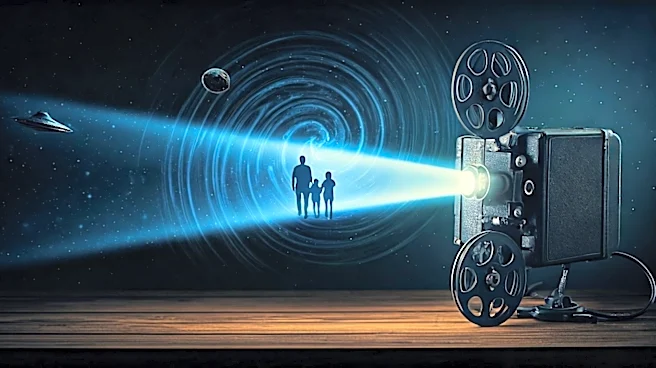
clearances are testifying under oath. Respected journalists and former military pilots are discussing it on cable news. The subject of “Unidentified Anomalous Phenomena” (UAPs) has officially gone mainstream, and with it comes a palpable sense of anticipation. We are, it seems, living in the prequel to a movie we’ve all been waiting to see. And if there’s one person who has taught us how a moment of grand, world-changing revelation is supposed to feel, it’s John Williams. The idea of his 'return'—even as a metaphor—isn't just a fun piece of fan-casting. It speaks to a deep cultural need to frame this potentially reality-shattering moment not with fear, but with awe.
The Spielberg-Williams School of First Contact
You can’t talk about John Williams without talking about Steven Spielberg. Their collaboration is arguably the most influential force in shaping the modern public’s imagination of extraterrestrial life. Before them, aliens in cinema were largely invaders or monsters. Think *The War of the Worlds* or *The Thing from Another World*. But in 1977, *Close Encounters of the Third Kind* changed the entire emotional grammar of first contact. The film’s iconic five-note musical phrase, composed by Williams, wasn’t a precursor to an attack; it was a greeting. It was the sound of curiosity, mathematics, and peace. The score swells not with terror, but with a profound, almost spiritual wonder as humanity makes contact. Five years later, Williams and Spielberg doubled down with *E.T. the Extra-Terrestrial*. The soaring theme that accompanies Elliott and E.T.’s moonlit bike ride isn't just a piece of music; it's the definitive sound of friendship and wonder transcending cosmic boundaries. This is the emotional toolkit Williams provides. He gave us a score for hopeful contact, not hostile invasion.
Music as Modern Myth-Making
Williams’ power goes beyond aliens. His music is the sonic architecture of modern American mythology. When you hear the opening blast of the *Star Wars* theme, you’re not just hearing music for a space movie; you’re hearing the sound of destiny, of good versus evil on a galactic scale. The brassy fanfare of his *Superman* theme is the embodiment of heroism and hope. The adventurous sweep of the *Indiana Jones* march is the feeling of uncovering lost history. Williams doesn’t just score scenes; he scores ideas. He writes the music for archetypes. Invoking his name in the context of Disclosure Day is a way of saying we want this story to be a myth. We want it to be a grand, sweeping narrative about humanity’s place in the cosmos, not a bureaucratic press release or a terrifying horror film. We want the soaring strings and hopeful French horns to tell us that this is a moment of elevation, not a moment of dread.
A Narrative Battle for Reality
The cultural narrative around UAPs is currently a battle between two poles. On one end is the Williams/Spielberg sense of awe—the idea that contact could be enlightening, peaceful, or at the very least, wondrously strange. On the other end is the tradition of *Alien*, *Independence Day*, and *War of the Worlds*—the deep-seated fear that the unknown is inherently hostile and predatory. The current moment feels unstable, oscillating between these two possibilities. Government officials speak in sterile, cautious language, while some whistleblowers hint at more unsettling truths. By wishing for a Williams-esque framing, we are expressing a collective desire for the more hopeful outcome. We’re choosing the story we *want* to be true. It’s a recognition that how this information is presented to the world—the 'score' it’s set to—will be just as important as the information itself.