
A Clarinet That Cut Through Steel
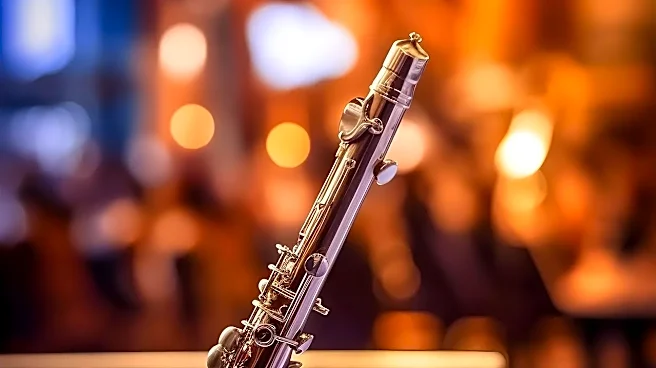
First, there was the man himself and his instrument. Goodman was a prodigy from Chicago who possessed a level of technical mastery that few could match. His classical training gave him a precision and clarity that stood in stark contrast to the rougher,
more blues-inflected styles of many of his peers. His tone was bright and assertive, allowing his clarinet to slice through the powerful brass and reed sections of his orchestra, a feat that required immense skill and control. While other bands were built around the collective power of their horns, Goodman's orchestra was often a launchpad for his own virtuosic, soaring solos. This wasn't just a band; it was a showcase for a master instrumentalist at the peak of his powers.
The Engine Room: Fletcher Henderson's Arrangements
Goodman's personal talent was undeniable, but the architecture of his band's sound came from another genius: Fletcher Henderson. Henderson was a brilliant bandleader and arranger whose own pioneering orchestra struggled commercially. In a pivotal move, Goodman bought Henderson's entire book of arrangements for songs like "King Porter Stomp" and "Sometimes I'm Happy." These weren't just melodies; they were sophisticated musical blueprints. Henderson perfected a call-and-response style, pitting the brass section against the reeds, creating a dynamic musical conversation over a driving rhythm. This structure, which became a hallmark of the Goodman orchestra, gave the band a complexity and propulsive energy that made other dance bands of the era sound tame by comparison.
The Perfectionist's Touch
Having brilliant arrangements was one thing; executing them was another. Goodman was a notoriously demanding bandleader, a perfectionist who drilled his musicians relentlessly. He demanded impeccable intonation, uniform phrasing, and a tight, cohesive energy that made the entire orchestra sound like a single, perfectly calibrated machine. This precision, combined with the hot, improvisational solos from stars like trumpeter Harry James and drummer Gene Krupa, created a signature tension. The band could play the most intricate written passages with flawless accuracy and then, on a dime, unleash a torrent of spontaneous jazz. It was this combination of disciplined structure and explosive freedom that made their performances so electrifying.
Breaking Barriers, Creating a New Sound
Perhaps the most revolutionary element of Goodman's sound had nothing to do with musical notation. In a segregated America, Goodman made the audacious decision to build his smaller combos around the incredible talents of African American musicians. By hiring pianist Teddy Wilson and vibraphonist Lionel Hampton, he didn't just break the color barrier in popular music; he created a new musical chemistry. The Benny Goodman Trio and Quartet played a more intricate, conversational style of jazz—what Goodman himself likened to chamber music. The interplay between his clarinet, Wilson's elegant piano, and Hampton's shimmering vibraphone was something entirely new, adding a layer of sophisticated, cool improvisation to his already famous hot swing.
The Carnegie Hall Coronation
All these elements converged on January 16, 1938, when Benny Goodman brought his orchestra and integrated quartet to Carnegie Hall. It was the first time a jazz band had ever headlined the prestigious classical venue. The event was a massive risk, but it became a landmark moment in American music history. That night, the raw energy of Henderson's arrangements, the band's razor-sharp precision, the groundbreaking integrated performances, and Goodman's own soaring clarinet solos proved to a skeptical world that jazz was a serious art form. The concert was a cultural phenomenon, cementing Goodman's title as the "King of Swing" and showcasing a sound so powerful and unique that it defined an era.