








An Anchor in a Sensory Storm
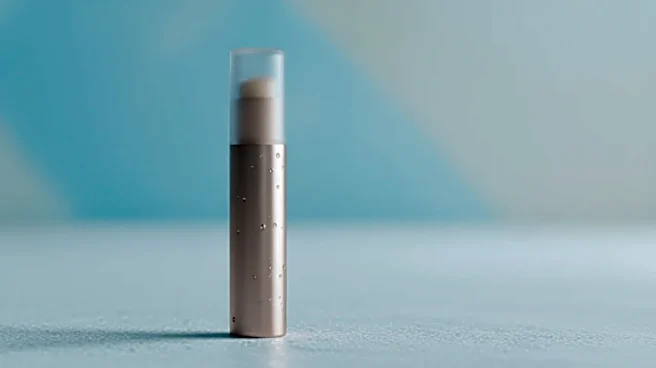
When anxiety strikes, your brain is often overwhelmed by “what-if” scenarios, creating a storm of internal distress. Applying lip balm is a grounding technique. It pulls your focus away from the chaotic future-tripping in your head and into the physical
present. The smooth glide on your lips, the specific texture, even the slight pressure—these are all tangible sensations. Engaging your senses, particularly touch, forces your brain to pay attention to the here and now. This simple act serves as an anchor, momentarily cutting through the noise of your racing thoughts and reminding your nervous system that you are physically safe in this exact moment.
The Comfort of a Controllable Ritual
Anxiety often stems from a feeling of being out of control. A pre-event situation is full of unknowns. Will they like you? Will you forget your lines? Will you say the right thing? In the face of this uncertainty, the human brain craves predictability. The act of unscrewing a cap, twisting the tube, and applying the balm is a small, manageable ritual. It’s a sequence of events you have complete control over, with a known beginning, middle, and end. Research has shown that performing simple rituals before a stressful task can significantly reduce anxiety and even improve performance. By completing this micro-task, you give yourself a tiny, subconscious jolt of agency, which can make the larger, more intimidating task feel just a little more manageable.
A Disguised Moment of Mindfulness
Think of it as an accidental deep breath. While you may not be consciously meditating, the act of applying lip balm forces a brief pause. You stop what you're doing, your posture might shift, and you concentrate on a small, deliberate action. This serves as a “pattern interrupt” for the cycle of anxious thoughts. For a few seconds, you aren’t worrying about the event; you’re focused on not smudging your lip balm. This brief moment of focused attention is a form of mindfulness. It activates the parasympathetic nervous system—the body's “rest and digest” system—which helps counteract the “fight or flight” response triggered by anxiety. This can slow your heart rate and bring a sense of calm.
The Power of Scent and Memory
Never underestimate the power of your nose. Scent has a uniquely direct pathway to the limbic system, the part of the brain that governs emotion and memory. Unlike other senses, what you smell can trigger an emotional response before you’ve even consciously processed the scent itself. If you’ve used the same cherry, vanilla, or mint-flavored lip balm for years, its scent is likely associated with countless non-stressful moments—sitting at your desk, watching a movie, or relaxing at home. When you smell that familiar fragrance in a high-stress situation, your brain accesses those comforting memories, sending a subtle signal that everything is okay. That familiar scent becomes a shortcut to a feeling of safety and normalcy.