





The Chaos is the Point
From its opening moments, 'The Bear' has never been a show about achieving a state of blissful perfection. It's a show about the process. The stress, the shouting, the relentless pressure—this isn't just dramatic window dressing; it's the thematic heart
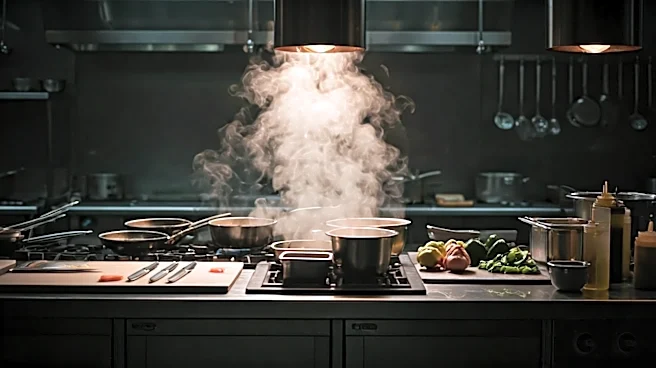
of the series. The kitchen is a pressure cooker for grief, ambition, and generational trauma. Carmy’s return to Chicago wasn’t just to save a restaurant, but to confront the chaotic legacy of his family. To end with a serene, problem-free restaurant with three Michelin stars and zero interpersonal conflict would be to fundamentally misunderstand what the show has been telling us for five seasons: life, like a real kitchen, is a state of controlled—and sometimes uncontrolled—chaos. A satisfying finale must align with the tone of the overall series, and for 'The Bear,' that tone is a symphony of clashing pots, frantic “corners,” and simmering tension.
Authenticity Over Fan Service
Let’s imagine the perfectly happy ending. Carmy is emotionally balanced and in a stable relationship. Sydney is a celebrated chef with none of the anxieties that fuel her genius. Richie is a Zen master of hospitality. It sounds nice, but it also sounds like a different show. These characters are defined by their flaws, their scars, and their slow, agonizing, and deeply realistic growth. Carmy doesn’t just cook; he uses cooking to process his trauma and anxiety. Richie’s transformation from 'Cousin' to a purpose-driven manager was powerful because it was hard-won, not handed to him. A finale that erases all this complexity in favor of a neat bow would feel like fan service, not authentic storytelling. Great endings provide closure that is loyal to the characters, and for the staff of The Bear, closure means accepting that they will always be a work in progress.
Redefining a 'Good' Ending
Resisting a clean happy ending doesn't mean the finale has to be bleak. In fact, the most powerful conclusion for 'The Bear' is one that redefines success on the show’s own terms. It’s not about winning; it’s about enduring. A truly great ending wouldn't see the chaos disappear. It would see the characters finding sustainable ways to live within it. Maybe the restaurant is a success, but it's a precarious one, always one bad night away from disaster. Maybe Carmy finds a measure of peace, not by 'fixing' himself, but by accepting that his passion and his pain are intertwined. The found family at The Bear is just that—a family. And real families aren't perfect; they're messy, complicated, and bound by a love that persists despite the friction. The most resonant ending is one where the crew is still together, still fighting, still cooking—not because they've solved all their problems, but because they've learned how to carry them together.
The Legacy of the Struggle
Ultimately, 'The Bear' is a show about work. Not just the physical labor of the kitchen, but the emotional work of healing, grieving, and learning to connect. A finale where everything is magically resolved would cheapen that labor. It would suggest that the struggle was just a temporary inconvenience on the road to a fairy-tale ending. But the show has always argued the opposite: the struggle is where meaning is forged. The beauty is in the shared effort, the near-misses, and the collective exhale after a brutal service. The show's legacy shouldn't be a snapshot of a perfect restaurant. It should be the moving picture of a group of broken people who found, in the heat and chaos of a Chicago kitchen, a way to make something beautiful and, in the process, save each other. That’s a messy ending. And it’s the only one that makes sense.