







The Alien Invasion We All Remember
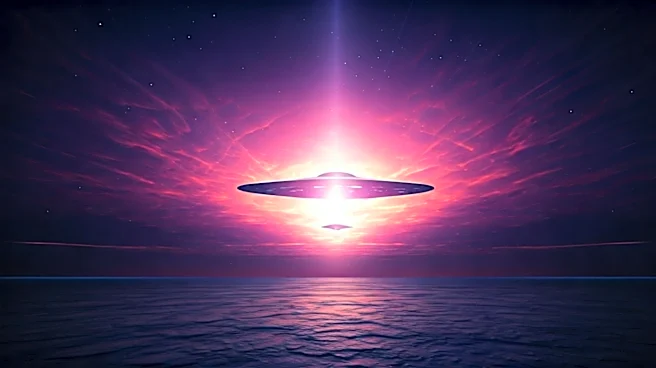
The movie, of course, is Independence Day. Released in 1996, it wasn’t just a film; it was a cultural event that defined the summer blockbuster. With its jaw-dropping scenes of exploding landmarks and a charismatic ensemble cast led by Will Smith, Jeff
Goldblum, and Bill Pullman, it became the highest-grossing film of the year. The premise was simple: a hostile alien race arrives with overwhelming force, and humanity’s only hope is to unite. The film captured the spirit of the mid-90s, a relatively optimistic pre-9/11 era when the Cold War was over and the biggest national anxieties seemed to be in the rearview mirror. It was a time of perceived peace and prosperity, making a fictional global threat the perfect canvas for a unifying, feel-good action flick.
A Fantasy of Unity in a Divided Time
The heart of Independence Day isn't the explosions, but President Thomas J. Whitmore’s iconic speech. Facing impossible odds, he rallies a ragtag group of international pilots not as Americans, but as residents of Earth. “We will not go quietly into the night!” he declares, reframing the Fourth of July as a global holiday. It’s a moment of pure, uncut Hollywood hopefulness, presenting a world where “petty differences” are instantly forgotten in the face of a common enemy. The speech was so effective, it reportedly solidified the film’s title, which the studio originally wanted to call Doomsday. This idea of instant, planet-uniting clarity feels like a fantasy now. Recent surveys and reporting from mid-2026 paint a picture of an America wrestling with deep internal divisions, where even celebrating a national holiday can feel like a partisan act. In an era defined by political polarization, the movie’s vision of a world effortlessly setting aside its conflicts for a greater good seems more like science fiction than the alien invasion itself.
Why It Hits Different in 2026
So why does this thirty-year-old movie suddenly resonate? Because its central theme—unity—has become a scarce and precious commodity. Watching Independence Day in 2026, as the nation marks its 250th anniversary amidst social and political friction, feels less like simple nostalgia and more like a lament. The film offers a glimpse of a world where leadership is clear, the enemy is obvious, and the path to victory is shared sacrifice. It’s a stark contrast to a reality where the challenges are complex and the divisions run deep. Nostalgia for the 90s is potent, often seen as a longing for a time before smartphones and social media, when life felt less complicated. The film acts as a cultural touchstone for that era’s optimism, a reminder of a time when the idea of America leading a united world felt not only possible, but natural.
A Comforting Escape or a Faint Hope?
For many, re-watching President Whitmore lead a global charge is a comforting escape—a cinematic reminder of what unity can look like, even if it’s fictional. The film’s earnest, sometimes cheesy, patriotism is a far cry from modern cynicism. The heroes are unambiguous, the mission is righteous, and the ending is triumphant. It simplifies a messy world into a clear battle of good versus evil. Yet, there’s another layer to its renewed relevance. Perhaps the film’s message isn’t just a fantasy, but a quiet question: What would it take for us to see each other as being on the same team again? The movie’s enduring appeal lies in that powerful “what if.” It doesn’t offer a practical roadmap for solving today's problems, but it powerfully illustrates the spirit required to face them: the belief that what connects us is ultimately stronger than what divides us.