
Architecture on Hard Mode
Building anything at Burning Man is an exercise in extreme engineering. Designers contend with blistering heat, corrosive alkali dust, and sudden, high-velocity winds that can flatten lesser structures.
Add to that the core principle of "Leave No Trace," which means every single component, down to the last wood splinter, must be packed up and hauled away. This isn't just construction; it's ephemeral architecture. Theme camps, which can range from small crews to massive villages hosting hundreds of people, spend months planning every detail. The goal is to create an immersive, interactive experience that can be assembled and disassembled in a matter of days, all while withstanding one of the most inhospitable environments in the country.
The Gospel of 'Pack Small, Play Big'
The secret to building a temporary city is modularity. Think of it as adult LEGOs, but on a much grander and more creative scale. The philosophy is simple: create systems of interlocking parts that pack down flat but assemble into large, complex structures. Geodesic domes have long been a festival staple for their inherent strength and efficiency, but modern camps have pushed the concept much further. You'll see camps built from CNC-cut plywood panels that slot together without tools, stackable cubes that form multi-story living quarters, and custom-engineered backdrops that snap together to create seamless, professional-looking walls. These systems are designed for rapid deployment, allowing a small crew to erect a massive frontage or complex lounge space in hours, not days. This approach minimizes setup time and, crucially, makes teardown and transport manageable.
A Toolkit of Desert-Proof Materials
While you might see incredible structures that look like stone temples or futuristic cities, the materials used are chosen for their practicality. Plywood is a workhorse, but it's often sealed or painted to prevent it from shedding splinters, a major source of MOOP (Matter Out of Place). Metal frameworks, often steel or aluminum, provide the skeleton for larger installations, like the 72-foot-tall Grand Pyramid at one camp. But the real scenic magic often comes from fabric. Large swaths of stretch fabric, like Lycra or spandex, are used to create flowing canopies, dynamic walls, and shaded spaces. These materials are lightweight, pack down incredibly small, and catch the light beautifully, transforming a simple metal frame into a glowing, otherworldly pavilion at night. Canvas is another favorite, especially for living quarters, as its breathability is a major advantage over nylon in the desert heat.
Atmosphere Forged in Light and Code
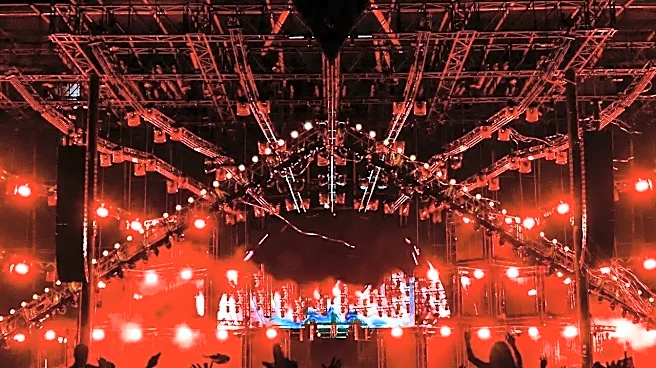
A convincing world is more than just its buildings; it’s about atmosphere. This is where technology plays a huge role. Programmable LED lighting is ubiquitous, with camps creating synchronized light shows that turn their structures into living, breathing entities after sunset. An entire camp can pulse with color in time to a DJ’s set, or a serene lounge can be bathed in a slow, calming color shift. Projection mapping takes this even further, painting static surfaces with moving images and transforming a simple polycarbonate-paneled pyramid into a dynamic art piece. Sound design is also key, with camps curating auditory experiences that complement their visual theme. These elements are what elevate a collection of structures from a simple camp into a fully immersive, convincing scenic world.