









The Tag Is the Timeline
Thrift stores and online marketplaces are treasure troves of sports history, but sorting true vintage from retro reproductions can be tricky. While the style of a logo or the cut of a jacket offers clues, the most reliable information is stitched right
into the seam. For decades, U.S. manufacturers have been required to include tags that do more than just state the size and brand; they carry specific manufacturing and legal information. These details, once intended for regulatory purposes, have become a Rosetta Stone for collectors. By learning to read these tags, you can unlock the story of a garment, pinpointing its era of production and confirming its authenticity. It’s the closest thing to a time machine you can find in a closet.
Your New Best Friend: The RN Number
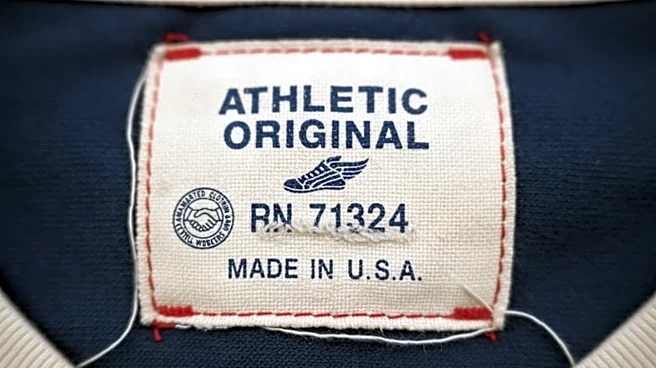
The most powerful tool in your vintage-dating arsenal is the Registered Identification Number, or RN. Issued by the Federal Trade Commission (FTC) to U.S. companies involved in manufacturing or selling textile products, this number is a direct link to a manufacturer. More importantly, the number itself gives you a baseline for the garment's age. The system was overhauled in 1959, with new numbers starting at 13670. This means any garment with an RN number of 13670 or higher was made no earlier than 1959. Numbers in the 13670 to 20000 range often point to the 1960s, while five-digit numbers continued to be issued into the late 1990s before transitioning to six digits. You can look up any RN in the FTC's online database to find the company it was issued to. This provides a crucial "not before" date—the piece can't be older than the date the RN was issued to that company.
When There's No RN, Look for the Union
Before the RN system was fully standardized, and even for decades after, another tag told a powerful story: the union label. For much of the 20th century, many American garments were produced by unionized workers. The most common label found in women's clothing is from the International Ladies' Garment Workers' Union (ILGWU), whose tag design changed over the decades, making it an excellent dating tool. For example, a label featuring the ILGWU logo combined with "AFL-CIO" indicates a manufacturing date between 1955 and 1995. If the label is a simple monochrome blue or black stamp, it likely predates 1959. The red, white, and blue stitched version didn't appear until the mid-1970s. Finding a union bug is a surefire sign of American manufacturing from a specific period.
Other Critical Clues on the Tag
Beyond official numbers, the tag itself provides a wealth of information. The biggest giveaway is the presence of care instructions. The FTC made care labels mandatory in the U.S. starting in July 1972. If your garment has washing instructions, it’s from after that date. If it has none, it’s very likely older. The material of the tag is also telling. Woven rayon or embroidered cotton labels suggest an earlier production era, while paper-like Tyvek tags became common in the 1970s and beyond. Furthermore, the Textile Fiber Products Identification Act of 1958 required labels to disclose fabric content, so a lack of material information can also point to an earlier vintage piece.
Decoding Specific Sports Brands
While government-mandated tags provide a framework, brand-specific details can help you narrow the timeline even further. Iconic sportswear brands like Champion, Starter, and Nike have tag designs that evolved significantly. For instance, Champion, founded in 1919, used various names like "Champion Knitting Mills Inc." in the 1930s before settling on its modern branding. Its famous "C" logo wasn't widely used until the 1960s. Starter jackets from the 1980s were often made in the USA, with production moving to Korea and Hong Kong later on. The company's bankruptcy around 1999 means any piece with an official league license (like the NFL or NBA) is almost certainly from before that year. Combining these brand-specific clues with the RN number and care label information allows you to build a complete and accurate picture of when your vintage sports treasure was made.