









The Brutal Nature of Tournament Football
Unlike a long league season where a bad week can be corrected over months, major international tournaments like the World Cup are exercises in compressed, high-stakes drama. The entire competition unfolds over a single month, culminating in a series of
single-elimination knockout games. There are no second chances. This format inherently magnifies the importance of individual moments. A team can be brilliant for 90 minutes but lose on a single defensive lapse or a penalty shootout. This unforgiving structure creates an environment where one mistake isn't just a mistake—it's the potential end of a four-year cycle of hope and hard work. This is why a team that dominates a final but loses on penalties is remembered not for their dominance, but for their failure to close the deal. The finality of the result overwhelms the context of the performance.
The Burden of a Nation's Dreams
Club soccer has passionate fans, but international soccer carries the weight of national identity. When a team takes the field, they represent millions. For soccer-crazed nations like Brazil, Argentina, Italy, or Germany, the World Cup is a matter of cultural pride. This intense expectation creates monumental pressure. The most infamous example is Brazil's 1950 World Cup loss to Uruguay on home soil, an event so traumatic it was given its own name: the *Maracanazo* ("the Maracanã blow"). The national grief was so profound that it haunted Brazilian soccer for decades. More recently, Brazil’s 7-1 semifinal implosion against Germany in the 2014 World Cup, again on home soil, became another permanent scar. These aren't just sporting losses; they are perceived as national embarrassments, and the players involved are forever linked to that collective trauma.
The Search for a Single Villain
When collective dreams crumble, the public and media often search for a simple explanation, and that explanation is usually a scapegoat. It’s easier to process a complex failure by pinning it on one person. The classic case is Italy’s Roberto Baggio at the 1994 World Cup final. Baggio had been the hero of Italy's run, scoring crucial goals to drag his team to the final against Brazil. Yet, his legacy is inextricably tied to the final moment: his missed penalty in the shootout that handed Brazil the trophy. Never mind that two other Italians had already missed their penalties; Baggio took the final, decisive kick, and his was the one that sailed over the bar. For years, one of the most gifted players of his generation was unfairly defined by that single, heartbreaking image. It's a narrative shortcut that turns a complex team failure into a simple, personal tragedy.
The Ghosts That Haunt 'GOAT' Debates
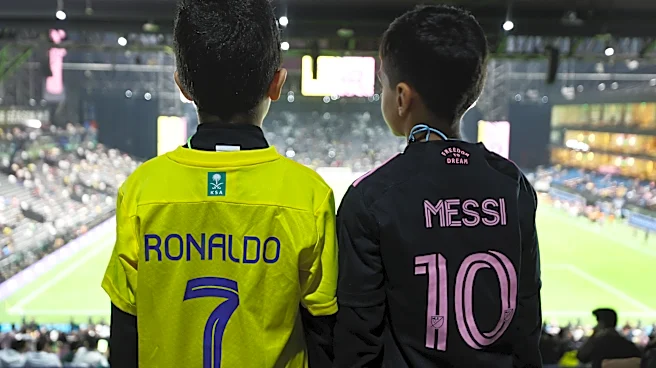
For the world’s elite players, international tournament collapses become the ultimate weapon in legacy debates. For years, the primary argument against Lionel Messi being the undisputed "Greatest Of All Time" (GOAT) was his lack of a World Cup trophy. His losses in the 2014 final and subsequent Copa América finals were presented as evidence of a flaw in his character or ability to deliver under pressure, especially when compared to Diego Maradona's 1986 triumph. Similarly, Cristiano Ronaldo’s lack of a World Cup is the one significant gap on his otherwise sterling resume. Johan Cruyff’s legendary Dutch team of 1974 is remembered almost as much for losing the final as for inventing "Total Football." These tournament shortcomings are not footnotes; they become central arguments, used to question a player’s place in the pantheon. A player can win every club trophy imaginable, but for many, history will judge them on what they did—or didn’t do—in a handful of games for their country.