





The Status of the Sleeve
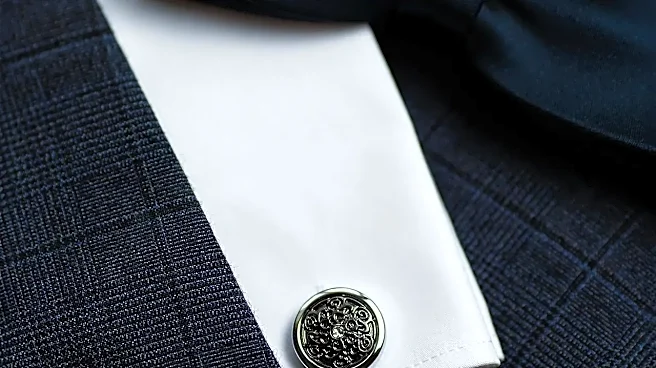
For decades, the French cuff has been a staple of formal and power dressing. It's the cuff of James Bond, of black-tie events, and of high-stakes boardroom meetings. Unlike the standard barrel cuff that simply buttons around the wrist, the French cuff is a longer
piece of fabric that is folded back on itself and secured with cufflinks. This doubling of fabric creates a more substantial, intentional look at the wrist, one that signals a certain degree of sartorial effort and sophistication. It’s a deliberate choice, a small act of theater in a world of casual convenience. But for all its public-facing flair, the true mark of mastering the French cuff lies not in the cufflinks, but in a far more discreet feature.
The Detail You're Missing
Take a look at the sleeve of a quality dress shirt, a few inches up from the cuff itself. On the opening of the sleeve—the part that allows you to get your hand through—you might find a small, lonely-looking button. This is the gauntlet button, sometimes called a placket button. Many men, even those who regularly wear French cuffs, ignore it completely, assuming it’s a vestigial, decorative touch. Some lower-quality shirts don't even have one. But this button is not decorative. It has a crucial job to do, and using it correctly is the dividing line between looking polished and looking like you're playing dress-up in your dad's clothes.
Why It Changes Everything
The gauntlet button's function is simple: it is meant to be buttoned. Its purpose is to hold the sleeve placket closed, preventing it from gaping open above the cuff. When left undone, especially on a looser-fitting shirt, the sleeve placket will often flare out, creating an unsightly gap that reveals a flash of forearm. It breaks the clean, crisp line that is the entire point of a well-tailored shirt. Buttoning the gauntlet creates a seamless and tidy transition from the cuff to the rest of the sleeve, ensuring the entire assembly remains sharp and composed, whether your arm is at rest or in motion. It's a small action that maintains the structural integrity of the sleeve's appearance.
A Historical Echo
Interestingly, the term "gauntlet" has martial origins, harking back to the armored gloves worn by medieval knights. The original buttons in this area helped secure their heavy hand armor, preventing it from sliding down. While the modern man is fighting spreadsheets instead of dragons, the principle of keeping things securely in place remains. Today, that tiny button performs a similar function for the modern uniform, locking down the sleeve placket to maintain a crisp, orderly appearance throughout the day. It’s a subtle nod to a history of functional design, proving that the best details are often the ones with a purpose.
Putting It Into Practice
From now on, treat the gauntlet button as part of the process. When you put on a French cuff shirt, fasten the cufflinks, and then fasten the gauntlet button. You'll immediately notice the difference. The sleeve will sit more cleanly on your forearm and, crucially, will slide more elegantly under a jacket sleeve without bunching or catching. This single, simple step prevents that sloppy, unintentional sleeve-flare and showcases the shirt as it was designed to be worn. It’s a quiet signal that you not only own nice things, but you know how to wear them. It’s a testament to the idea that true style is found not in the boldest statement, but in the deliberate and correct execution of the smallest details.