




A Rebellion Born on the Street
To understand the miniskirt, you have to picture the world it was born into. The late 1950s and early 1960s were a turning point. A generation of young people, the first to grow up after the war, rejected the stiff, conservative styles of their parents.
In the heart of “Swinging London,” a cultural youthquake was underway, and it needed a uniform. While French designer André Courrèges was introducing shorter, futuristic skirts to haute couture, it was British designer Mary Quant who captured the movement's spirit. Quant famously said the girls on her local King's Road invented the mini; she just gave them what they wanted. From her boutique, Bazaar, she sold simple, brightly colored A-line skirts that hit well above the knee. They weren't just clothes; they were a declaration of independence. Paired with colorful tights, they represented a playful, energetic, and defiant break from the past.
More Than a Hemline
The miniskirt's arrival coincided with massive social change, particularly for women. The availability of the birth control pill offered new sexual freedom, and more women were entering the workforce and higher education than ever before. The skirt became a visual symbol of this new autonomy. It was practical, allowing for a freedom of movement that longer, more restrictive clothing didn't offer. It was also controversial, immediately drawing criticism from an older generation who saw it as an affront to decency. Schools banned it, employers frowned upon it, and social commentators debated it endlessly. But for many young women, the miniskirt was, as one teen in 1968 called it, an “independence flag.” It was a way to claim ownership of their bodies and their identities in a world that was rapidly changing.
A Canvas for Every Decade
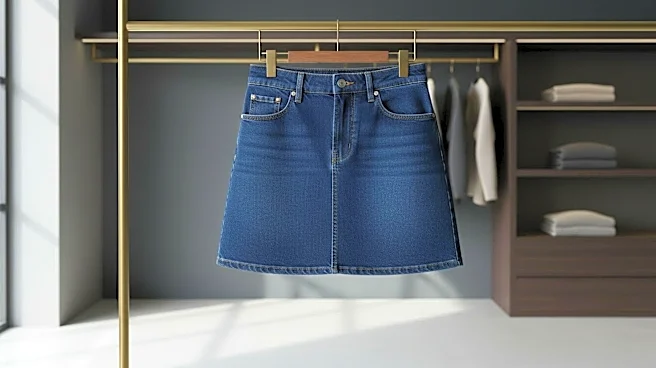
If the miniskirt had only been a 1960s phenomenon, it would still be iconic. But its real power lies in its adaptability. It didn't disappear when the swinging sixties ended; it evolved. In the 1970s, the punk movement shredded and customized it, turning it into a symbol of anarchic defiance. The 1980s saw it absorbed into the power-dressing movement, often as the bottom half of a sharp-shouldered suit, and in the form of the rah-rah skirt. The 90s offered multiple versions, from the preppy, plaid styles seen in movies like Clueless to the grunge-era denim skirts. In the 2000s, it became ultra-short and low-rise, a staple of pop-star fashion. Through each era, the miniskirt has proven to be a blank canvas, reinterpreted to fit the cultural moment while never losing its core identity.
The Real Reason It Endures
So, what is the real reason the miniskirt outlasts trends? It's because the miniskirt was never just about a hemline. Its endurance comes from what it has always represented: freedom. Initially, it was the freedom from the strict social codes of a post-war generation. It quickly became intertwined with the women's liberation movement, symbolizing freedom over one's own body and choices. Today, that legacy continues. The miniskirt is no longer shocking; it's a wardrobe basic. Women of all ages and styles wear it, proving its versatility. Its power no longer lies in rebellion, but in choice. The choice to be playful, professional, bold, or understated. Unlike trends that dictate a specific look, the miniskirt is a tool for self-expression. Its story is a reflection of women's evolving role in society, and that's a story that never goes out of style.