




The Science of Shared Screams
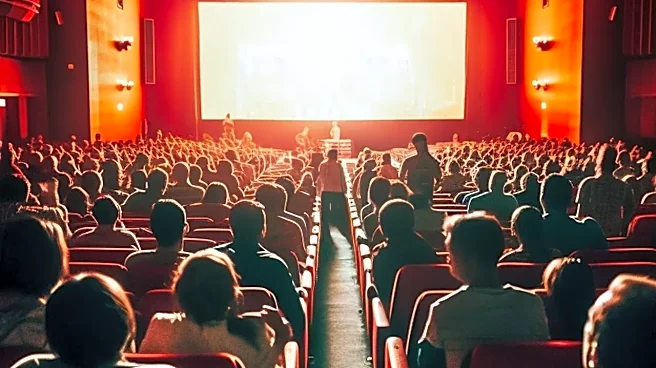
The primary reason a crowded theater feels scarier is a psychological phenomenon called emotional contagion. It’s the tendency for people to unconsciously mimic and absorb the emotions of those around them through cues like facial expressions, posture,
and, most importantly in a dark theater, sounds. When the person next to you gasps, your brain's mirror neurons can activate, prompting you to feel a similar jolt of fear before you've even fully processed what’s on screen. This creates a feedback loop: one person’s scream triggers another’s, and the collective reaction washes over the audience, intensifying everyone's individual experience. It’s an automatic, reflexive process that turns a room full of strangers into a single, terrified organism.
Your Brain on Social Proof
Another powerful force at play is social proof. Humans are naturally inclined to look to others for cues on how to behave, especially in ambiguous or unfamiliar situations. A tense horror movie, where the threat is implied but not yet visible, is a perfect example. Is that shadow just a shadow, or something more? When you hear others reacting with fear, it validates your own anxiety. You’re not just imagining the danger; the group’s reaction confirms it’s real and worth being scared of. This tendency to trust the crowd’s judgment is a cognitive shortcut that, in this context, lowers your skepticism and primes you for a stronger fear response. The collective belief that something terrifying is happening makes it so.
The Sensory Overload of the Theater
You can't discount the environment itself. Theatrical sound design is engineered for maximum impact, with booming bass and directional audio that can make a floorboard creak feel like it’s right behind you. The massive screen engulfs your peripheral vision, eliminating the real-world distractions you’d have at home, like your phone or the familiar comfort of your living room. This immersion is crucial. When you combine this sensory-deprived, high-stimulus environment with the auditory cues of a frightened audience—the sudden silences, the nervous laughter, the synchronized shrieks—the experience becomes physically and psychologically overwhelming. Every gasp and jump from the crowd adds another layer to the film's carefully constructed soundscape, making it impossible to escape the feeling of shared dread.
The Safety of Shared Vulnerability
Paradoxically, the presence of a group can also make you feel safe enough to be truly scared. Watching a horror movie in a theater comes with an unspoken social contract: everyone is there to be frightened together. This shared vulnerability gives you permission to scream, jump, and grab the arm of the person next to you without judgment. At home, you might suppress these reactions. But in a theater, expressing fear is part of the communal fun. This collective catharsis, or shared emotional release, can bond the audience together. Knowing you’re in a safe space where fear is the expected response allows you to lower your inhibitions and surrender completely to the experience, making the emotional rollercoaster feel both more intense and more enjoyable.