




An Antidote to 'Sensible'
The easiest way to understand the platform’s resilience is to see it as a reaction. For every trend, there is an equal and opposite counter-trend. In recent years, fashion has heavily favored the practical and the understated. Think of the dominance of the Birkenstock
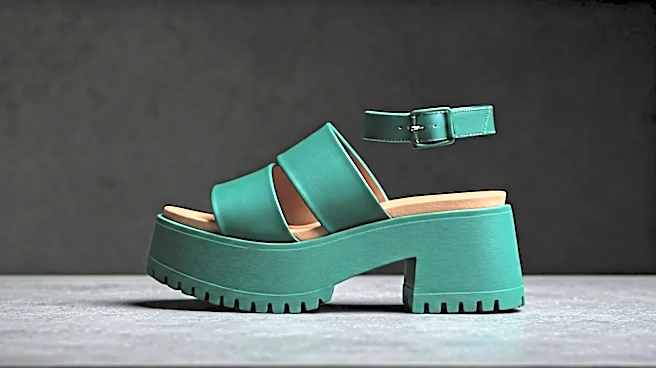
Arizona, the sleek leather slide, and the entire aesthetic of “stealth wealth,” where logos vanish and comfort is king. This is the gospel of flat-sandal minimalism: elegant, easy, and sensible. The platform sandal is none of those things. It’s a joyful rebellion against practicality. It’s fashion for fun, a form of “dopamine dressing” that prioritizes visual impact and personal amusement over blending in. When the landscape is saturated with subtlety, a bold, chunky silhouette feels fresh, exciting, and defiant.
The Power of Taking Up Space
Let’s not underestimate the simple, psychological power of height. Platforms offer elevation without the teetering instability of a stiletto heel. They give the wearer a solid, grounded base from which to be taller, more visible, and more commanding. This isn’t just about seeing over a crowd; it’s about feeling a sense of presence. In a world where women are often encouraged to make themselves smaller, the act of strapping on a shoe that literally and figuratively takes up more space is a powerful one. It’s a non-verbal cue that says, “I’m here.” This boost in stature translates directly to a boost in confidence, making the platform a tool for self-empowerment as much as it is a fashion accessory.
Riding the Nostalgia Wave
Fashion is cyclical, and nothing fuels the engine of that cycle like nostalgia. For modern wearers, the platform sandal is a direct line to two of the most romanticized style decades: the 1970s and the 1990s/Y2K era. The ‘70s platform evokes images of disco, freedom, and bohemian glamour—think Bianca Jagger at Studio 54 or Stevie Nicks on stage. The ‘90s version, meanwhile, taps into the edgy, youthful rebellion of rave culture and the playful pop optimism of groups like the Spice Girls. Wearing a platform today is like wearing a piece of that cultural memory. It allows us to borrow the attitude of a bygone era, whether it's the free-spirited confidence of the ‘70s or the cheeky girl power of the ‘90s. As new generations discover these decades through music, film, and social media, the platform is reborn as a must-have item.
A History Deeper Than You Think
While we associate platforms with the 20th century, their history is far more ancient and revealing. In ancient Greece, actors wore elevated sandals called kothorni to signify the status of the characters they were playing—the higher the platform, the more important the role. In 15th-century Venice, noblewomen wore towering “chopines,” sometimes up to 20 inches high, to protect their gowns from muddy streets and, more importantly, to display their immense wealth and status. They were so impractical that attendants were required to help them walk. Across cultures and centuries, the platform has consistently been used not for practicality, but for performance, status, and spectacle. This deep-rooted history proves that the desire to elevate oneself—both literally and socially—is a timeless human impulse.