




The Stage: A World Cup Showdown
The setting was Natal, Brazil, during the 2014 FIFA World Cup. It was a high-stakes group stage finale between Uruguay and Italy, two titans of international soccer. Only one team could advance to the knockout rounds, and the tension was palpable. Italy needed
just a draw, while Uruguay, led by their brilliant and volatile superstar Luis Suárez, needed a win. The match was cagey, physical, and scoreless for most of the game. Italy went down to 10 men, increasing the pressure and the simmering aggression on the field.
The Incident Seen 'Round the World
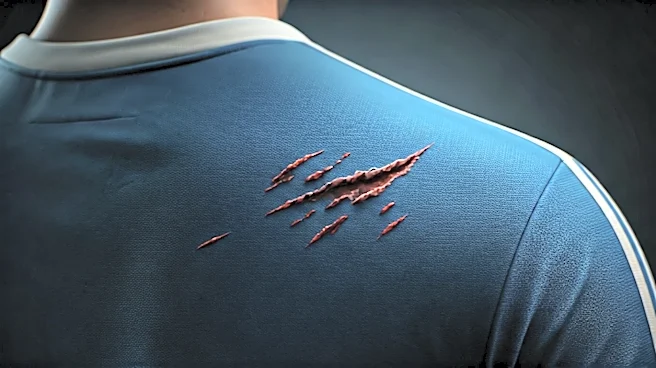
In the 79th minute, with the game still deadlocked at 0-0, Suárez jostled for position in the Italian penalty area with defender Giorgio Chiellini. Suddenly, Chiellini stumbled away, pulling his jersey collar aside to reveal what looked unmistakably like teeth marks on his shoulder. Suárez, meanwhile, dropped to the ground, holding his own teeth as if he were the injured party. The referee missed the off-the-ball incident, and no foul was given. Moments later, Uruguay scored the winning goal, knocking Italy out of the World Cup. The world, however, wasn't focused on the score. It was replaying the bizarre clash, asking in disbelief: did he really do it again?
A History of Biting
The reason for the collective incredulity was that this wasn't Suárez's first offense. It was his third. In 2010, while playing for Ajax in the Netherlands, he was suspended for seven games for biting PSV Eindhoven's Otman Bakkal, an act that earned him the nickname the "Cannibal of Ajax." Then, in 2013, as a star for Liverpool in the English Premier League, he was banned for 10 matches after biting Chelsea defender Branislav Ivanović's arm during a game. His actions at the World Cup weren't just a moment of madness; they were part of a disturbing and unprecedented pattern for a world-class athlete.
The Fallout and Global Infamy
While Suárez and the Uruguayan camp initially denied the bite, the video evidence was damning. FIFA, soccer's governing body, launched an investigation and delivered a historic punishment: a nine-match international suspension and a four-month ban from all football-related activity. It was one of the harshest sanctions ever handed down at a World Cup. But the official response was only part of the story. The bite instantly became a global meme. Images of Suárez with vampire fangs, dog cones, and Hannibal Lecter masks flooded the internet. The act wasn't just a sports controversy; it was a pop-culture phenomenon, cementing its infamy far beyond the pitch.
Why a Bite is So Different
In a sport filled with aggressive tackles, flying elbows, and heated arguments, why does a bite feel so much more shocking? Sports psychologists suggest it taps into something deeply primitive and taboo. A hard foul is part of the game's accepted violence, but biting is seen as a transgression of civilized norms, a regression to a childish or even animalistic state. It's an act of frustration and a profound loss of impulse control that feels alien to professional sports. Even Chiellini, the victim, later expressed a strange admiration for Suárez's cunning, acknowledging that the malice is part of what made him a formidable opponent. The act is so outside the normal bounds of athletic aggression that it carries a unique psychological weight, making it both horrifying and unforgettable.