





The Exhaustion of 'More'
We live in the age of CGI maximalism. In the blockbuster space, particularly sci-fi, the default philosophy is that more is always more. More ships, more explosions, more aliens, more city-leveling final battles rendered with photorealistic detail. The
screen becomes a chaotic digital soup where armies of pixels clash, buildings crumble into dust, and the laws of physics take a coffee break. While technically impressive, this approach has a critical flaw: it’s exhausting. When everything is an epic spectacle, nothing is. Our eyes glaze over. The sheer volume of visual information numbs us to the stakes. A film like Michael Bay’s *Transformers* franchise is the poster child for this style, where intricate action becomes an incomprehensible blur of grinding metal. The problem isn't the CGI itself, but the lack of artistic restraint in its application. It’s a strategy born of insecurity, a fear that if the screen isn’t constantly exploding with data, the audience will get bored. The result is often the opposite; we become detached, watching a video game cutscene instead of experiencing a story.
The Power of the Unseen
Now, consider the alternative: negative space. In visual art, it’s the area around and between the subjects. In filmmaking, it’s what you don't show. It’s the silence between notes, the shadow in the corner, the door that remains closed. This is where true tension, dread, and awe are born. Our imagination is a far more powerful rendering engine than any computer. Think of the classics. In *Jaws*, the shark is a malfunctioning prop, so Steven Spielberg is forced to suggest its presence with a fin, a yellow barrel, and that iconic two-note score. The result is pure, primal terror. In *Alien*, the xenomorph is a fleeting nightmare, a shape glimpsed in a strobe light or dripping from a ceiling vent. Its horror comes from its unknowability. More recently, Denis Villeneuve’s *Arrival* understood this perfectly. The aliens are mostly obscured by mist inside their massive, silent ships. The film isn’t about what they look like; it’s about the terrifying, awe-inspiring challenge of trying to understand them. This is the power of negative space—it forces the audience to lean in, to participate in creating the feeling the film wants to evoke.
A Better 'Disclosure Day'
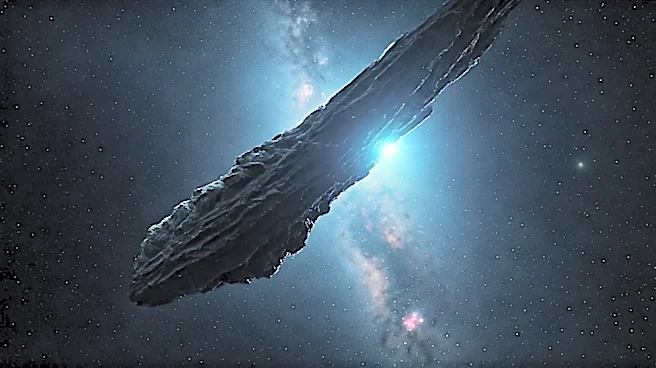
So how could a hypothetical *Disclosure Day* use this? Instead of a fleet of a thousand identical ships blotting out the sun, imagine one. A single, impossibly large, geometrically perfect object that simply appears, silent and inert, over a major city. No death rays, no immediate invasion. Just its presence. The film wouldn't be about fighting it; it would be about the global panic, the scientific scramble, and the existential dread of its arrival. We might never get a clear look inside the ship or a full-body shot of its occupants. Instead, we see their influence: technology that doesn't obey our physics, shadows that move wrong, sounds that defy explanation. The story would be told through the faces of the scientists, soldiers, and civilians staring up at the sky, their expressions a mix of terror and wonder. The true climax wouldn't be a fistfight with a CGI monster, but the moment a human linguist finally deciphers a single, terrifyingly simple message. That’s a movie that would stay with you, because its biggest moments would happen inside your own head.
Why Spectacle Undercuts Story
The CGI-overload version of *Disclosure Day* is predictable. We'd get a perfunctory first act of scientists looking at monitors, followed by an alien attack that conveniently targets landmarks we recognize. The heroes would find a nonsensical weak spot, and the final hour would be an incoherent blitz of lasers and explosions. We’ve seen it a dozen times. It’s visually loud but emotionally silent. By showing everything, the filmmakers remove all mystery and, consequently, all real stakes. The aliens become just another generic enemy to be punched. The awe of first contact—perhaps the most profound event in human history—is reduced to a simple action movie template. A restrained approach, however, respects the gravity of the concept. It understands that the idea of not being alone in the universe is infinitely more powerful than any monster you can render on a screen.