



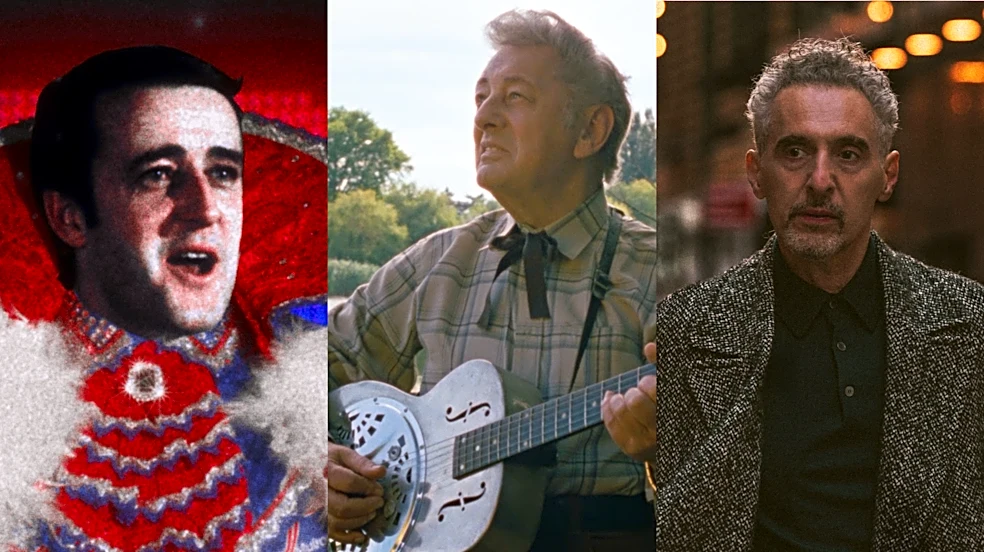

The City of Lost Children (1995)
Before 'Amélie', director Jean-Pierre Jeunet (with Marc Caro) crafted this visually stunning, steampunk fairy tale that feels like a spiritual sibling to del Toro's work. It stars del Toro regular Ron Perlman as a circus strongman searching for his kidnapped
little brother in a grimy, surreal port city. A mad scientist, Krank, is stealing children to harvest their dreams because he himself cannot. The film shares del Toro's love for intricate, lived-in production design, its green and amber color palette, and its core belief that the world is a whimsical but deeply broken place. It’s a grotesque, beautiful, and inventive fantasy that has 'The Devil's Backbone' and 'Cronos' in its DNA.
The Orphanage (2007)
This one is the most direct connection, as Guillermo del Toro himself served as a producer and was instrumental in getting it made. Directed by J.A. Bayona, 'The Orphanage' is a heartbreaking and genuinely terrifying ghost story. A woman returns to her childhood orphanage with her husband and son, intending to reopen it as a home for disabled children. Soon, her son begins communicating with an invisible friend, and old secrets begin to surface. The film perfectly captures del Toro's blending of gothic horror with profound human emotion. It’s not about cheap scares; it’s about grief, memory, and the ghosts we carry with us, echoing the somber, character-driven horror of del Toro's best Spanish-language films.
Tigers Are Not Afraid (2017)
Issa López’s stunning film is one del Toro has personally championed, calling it a compassionate and mesmerizing blend of fantasy and brutality. Set against the backdrop of Mexico's drug war, it follows a group of orphaned children who are haunted by both the cartel that murdered their parents and the ghosts that linger in the aftermath. Much like 'Pan's Labyrinth', the film uses magical realism not as an escape from reality, but as a lens to process unimaginable trauma. The children are granted three magical wishes, but in this brutal world, magic comes with a cost. It’s a powerful, gritty, and ultimately moving fairy tale that proves the enduring power of del Toro’s storytelling model.
Border (2018)
If 'The Shape of Water' and its celebration of monstrous love resonated with you, then 'Border' is essential viewing. Based on a story by the writer of 'Let the Right One In', this Swedish film follows Tina, a customs agent with a unique facial disfigurement and the uncanny ability to smell fear and guilt on people. Her lonely world is turned upside down when she meets Vore, a man who looks just like her and shares her strange connection to nature. What follows is a bizarre, tender, and shocking journey of self-discovery that is part folk tale, part crime drama, and part romance. It fully commits to del Toro's ethos of finding humanity and love in those that society deems 'other' or 'ugly'.
A Dark Song (2016)
For those fascinated by the clockwork machinery of the occult in films like 'Cronos' and 'Hellboy', this Irish indie horror is a must-see. 'A Dark Song' is a film about the process of magic. A grieving mother, Sophia, rents a remote house in Wales and hires an occultist, Joseph, to lead her through an arduous, months-long ritual to contact her deceased son. The film treats the supernatural with a grim, procedural seriousness that del Toro would appreciate. There are no jump scares, only a slow-burn descent into psychological and spiritual exhaustion. It’s a demanding, meticulously crafted film about the price of belief and the pain of grief, capturing the director's fascination with ancient rites and their toll on the human body and soul.