





The Anatomy of a Corner
First, a quick primer. A corner kick is awarded to the attacking team when the defending team is the last to touch the ball before it crosses the goal line (the end line). The attacking team then gets to place the ball in the corner arc and kick it into
the penalty area in front of the goal. It’s a dead-ball restart, meaning play has stopped, which allows both teams to organize. While it may seem like just a hopeful cross into a crowded box, modern soccer treats these as meticulously planned set pieces, much like a special teams play. In fact, a significant percentage of goals in professional leagues originate from set pieces like corners.
The Analogy: Hockey's Power Play
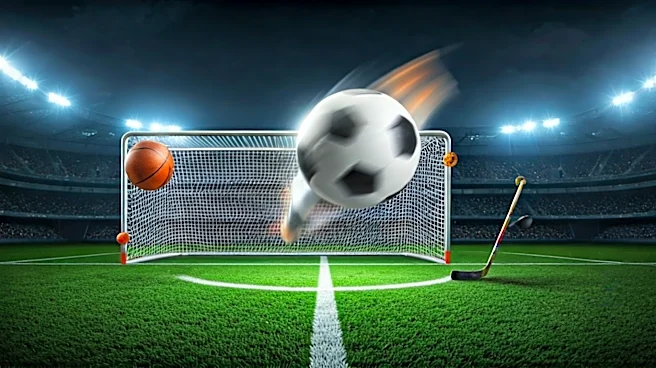
The clearest comparison is a power play in hockey. When a player is sent to the penalty box, their team is forced to play shorthanded, giving the other team a crucial one-player advantage. This immediately shifts the game's dynamics, creating more space and better scoring opportunities for the team on the power play. A corner kick functions similarly. While the teams are even at 11 players each, the attacking team gets to overload the most dangerous area of the field—the six-yard box—with their biggest and best headers, while the defending team scrambles to mark them. It creates a temporary, localized numerical and positional advantage. Like a power play unit, soccer teams have specialized corner kick personnel for both taking the kick and attacking the ball in the box. The goal is the same: use a temporary, structured advantage to generate a high-quality scoring chance.
The Analogy: Football's 4th and Goal
Think about the tension of a 4th-and-goal from the 2-yard line. The offense has one play, from a dead stop, to score. The coach calls a specific play, the players have precise assignments, and the outcome can swing the game. A corner kick shares this do-or-die DNA. It’s a single, high-leverage play with a clear objective. Attackers make coordinated runs to specific zones—near post, far post, or the penalty spot—while others act as blockers to screen defenders, just like offensive linemen creating a lane for a running back. The kicker, like a quarterback, must deliver the ball to a precise spot. It’s a pre-designed play that the team has practiced repeatedly, designed to exploit a perceived weakness in the defensive setup. The psychological pressure is immense, as one moment of brilliance or a single mistake can lead directly to a goal or a missed opportunity.
The Analogy: Basketball's Inbound Play
With five seconds left on the clock, a team calls a timeout to draw up a final play from a baseline inbound. The goal isn’t just to get the ball in, but to create an open shot for a specific player through a series of screens and cuts. This is the essence of an attacking corner. Soccer teams don't just kick the ball into a random spot; they run elaborate plays. You'll see players setting screens (called picks or blocks) to free up a teammate, just like a center setting a screen for a shooter in basketball. Some plays involve a short pass to a nearby player to draw defenders out of the box before delivering the final cross, creating confusion and space. This level of choreography—from fake runs that serve as decoys to specific movements designed to beat zonal or man-marking defenses—mirrors the tactical precision required to get a clean look off an inbound pass in the final moments of a close basketball game.