






The 'Woman of Tomorrow' Difference
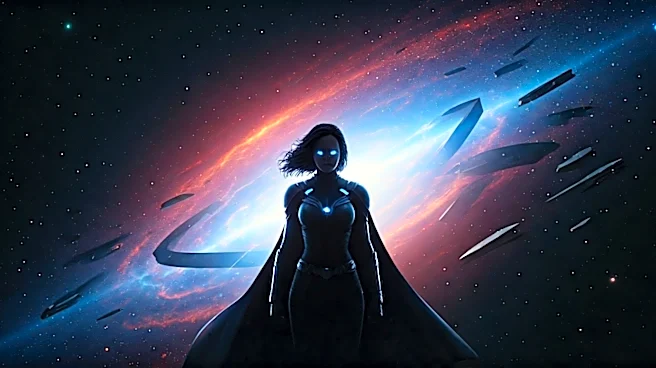
First, let's be clear: the movie's source material, the comic series by Tom King and artist Bilquis Evely, isn't your typical superhero fare. It's not about saving Metropolis from another predictable threat. The story finds a jaded, world-weary Kara Zor-El—celebrating
her 21st birthday by getting drunk in an alien dive bar—who gets pulled into a gritty revenge quest across the galaxy by a young, determined alien girl named Ruthye. It’s less a superhero story and more a space-western filtered through a lens of trauma and disillusionment. The comic’s “scale” comes not from city-leveling destruction, but from the breathtakingly strange and beautiful alien vistas Evely illustrates—and the immense emotional weight Kara carries. She isn’t just Superman’s cousin; she’s a refugee who watched her entire world die and is deeply, profoundly scarred by it. This is the character the movie needs to capture.
Learning from a Decade of Mistakes
The superhero genre is at a crossroads. Audiences are showing visible fatigue with the formula that dominated the last decade: a quippy hero, a bland villain seeking a glowing object, and a third-act battle saturated with unconvincing CGI that looks like muddy digital sludge. The previous DC Extended Universe, in its desperate chase to replicate Marvel’s success, often leaned into spectacle over substance, resulting in visually cluttered films with emotionally hollow cores. Trying to win a war of pure spectacle is a fool’s errand. The new DCU’s first true test isn’t whether it can create bigger explosions, but whether it can tell better stories. *Supergirl* offers the perfect opportunity to make that statement. A film that slavishly copies the blockbuster template while ignoring the poignant, character-driven heart of its source material will be seen for what it is: a missed opportunity.
The 'Guardians' Blueprint (With a Twist)
James Gunn, of all people, knows how to do this. His *Guardians of the Galaxy* trilogy is the gold standard for blending space-opera scale with a character-first focus. We remember those films not for the size of the explosions, but for a raccoon crying over his lost friends, a tree who can only say his name, and a group of broken people finding a family. The “budget” of those films was spent on character. *Supergirl: Woman of Tomorrow* can apply that same philosophy with a crucial twist: tone. Where *Guardians* is a boisterous comedy with a heart of gold, *Supergirl* should be a meditative drama with a core of steel. The focus shouldn't be on the team dynamic, but on one woman’s lonely, cathartic journey. The investment shouldn’t be in gags, but in giving Kara’s pain and eventual hope the screen time and gravitas they deserve.
Scale Through Specificity, Not Size
So how do you achieve “space-opera scale” on a “character-first budget?” You redefine what scale means. Scale isn't just the number of ships in a fleet; it's the feeling of awe inspired by a single, beautifully designed alien world. It’s the texture of a creature’s skin, the unique architecture of a backwater port, the sound of a language never before heard. Think of the visceral world-building in *Dune* or the lived-in grime of the original *Star Wars*. These films felt huge because their worlds felt real and specific. The key for *Supergirl* is to channel Bilquis Evely’s art. Her designs are intricate, organic, and strange. A film that successfully translates her visual language to the screen—prioritizing a handful of unforgettable, distinct locations over a dozen generic ones—will feel infinitely larger than one that just throws more computer-generated ships into a void.