



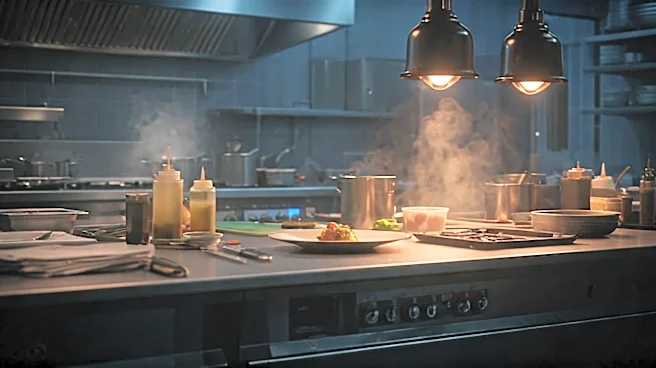


The Show That Glorified the Mess
From its opening moments, 'The Bear' was never just a show about food; it was a show about the beautiful, terrifying, and relentless nature of chaos. It was in the cacophony of a slammed ticket machine, the overlapping shouts of a frantic kitchen, and the internal
turmoil of its characters. The series taught us that control is an illusion and perfection is a trap. Carmy's obsessive pursuit of culinary excellence was always a desperate attempt to impose order on a life defined by trauma and grief. We didn't fall in love with the show because they were succeeding, but because they were surviving, often by the skin of their teeth. To wrap it all up with clear-cut victories—Michelin stars, new career paths, and emotional resolutions—feels like a betrayal of that core principle. It polishes the very grit that made the show feel so vital and real.
The Flaw in a Perfect Ending
The central tension of 'The Bear' was always the question of worthiness. The characters weren't just asking if they could run a successful restaurant; they were asking if achieving it would finally make them feel okay. For four seasons, the show brilliantly suggested that the answer was no—that external validation could never heal internal wounds. The final season, however, seems to suggest the opposite. By tying up loose ends and granting each character a form of professional or personal success, the narrative risks validating the very perfectionism it once critiqued. Carmy's journey was compelling because his talent was inseparable from his pain. A finale that allows him to neatly step away from the industry while his protégés achieve the ultimate prize feels less like a poignant conclusion and more like a well-intentioned but overly simplistic epilogue. The truest ending would have kept him in the fire.
Embracing the Unresolved
Imagine a different final service. Imagine if Sydney's partnership agreement remained unsigned, her ambition still wrestling with Carmy's chaotic genius. Imagine if the restaurant’s financial future was left uncertain, a single, glowing review away from either triumph or collapse. Imagine if Richie, having found his purpose, was still fighting to prove its value in a kitchen that might not exist in six months. This isn't a call for a bleak ending, but a realistic one that honors the world Christopher Storer so masterfully built. The show's most powerful moments were never the victories; they were the quiet acts of care amidst the storm, the found family choosing to show up for one another one more time, despite the overwhelming odds. Leaving some of those odds unresolved would have been the ultimate testament to the show's central theme: the process is everything.
The Meal We Should Have Gotten
In cooking, some dishes are about deconstruction. They take familiar elements and present them in a way that challenges your expectations. A truly brave finale for 'The Bear' would have been a deconstructed ending. It would have served us the sweetness of Richie’s growth alongside the bitterness of Carmy’s unresolved trauma. It would have given us the texture of a perfectly run service undercut by the lingering anxiety of unpaid debts. It would have trusted its audience to savor the complexity of an incomplete meal. Instead of a dessert that resolves all flavors into a single, sweet note, the show could have left us with something more challenging and memorable: a lingering question, a complex aftertaste, and the beautiful, aching feeling that the story, like life, isn't over just because the service has ended.