



The Blueprint of an Era
Before we talk about today, let’s define the blueprint. The 1990s, in reaction to the flamboyant excess of the '80s, ushered in an era of pared-back style. This wasn't about being boring; it was about being so confident you didn't need frills. Think of the images seared into our collective memory: Kate Moss in a sheer slip dress, Christy Turlington in a simple Calvin Klein tank top, or Linda Evangelista in a perfectly tailored Jil Sander suit. The designers of the moment—Calvin Klein, Helmut Lang, Donna Karan—built empires on clean lines, neutral palettes, and a philosophy that the person should wear the clothes, not the other way around. This was the uniform of the supermodel off-duty, and increasingly, on the red carpet. It was a radical statement
of anti-glamour that became its own form of untouchable glamour.
The Enduring Power of the Slip Dress
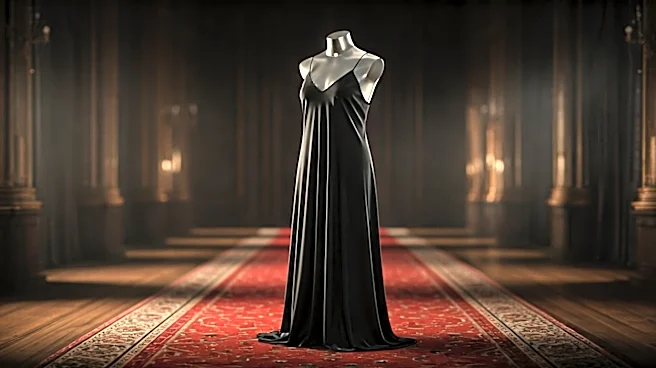
The most direct descendant of this era is, without question, the slip dress. It’s the ultimate test of minimalist chic. For decades, it was Kate Moss’s signature, a wisp of fabric that was equal parts vulnerable and defiant. Today, it’s a go-to for stars looking to make a statement through subtraction. We see it constantly at events like the AMAs. Think of Selena Gomez’s simple, elegant silk gowns or Olivia Rodrigo’s nods to slinky, '90s-inspired silhouettes. When a celebrity chooses a simple, unadorned slip in silk or satin, they are consciously tapping into that Kate Moss and Gwyneth Paltrow playbook from 1994. It’s a power move that says, “I don’t need sequins to shine.” The dress becomes a blank canvas, placing the focus squarely on the star’s confidence and presence.
Monochrome and Masterful Tailoring
Beyond the slip, the '90s minimalist influence is most obvious in tailoring and color—or the lack thereof. The era was defined by monochromatic looks, particularly in black, white, and shades of grey or beige. A sharp, black pantsuit or a simple white column gown was the pinnacle of sophistication. This is a trend with deep roots in the AMAs fashion history, a palette cleanser amidst a sea of color. When a star like Taylor Swift or Zendaya opts for a razor-sharp suit or a single-color gown with no embellishments, they are channeling that same energy. It’s less about a “look” and more about a “shape.” The focus is on the powerful silhouette, the clean lines, and the impeccable cut of the garment. It’s a style that communicates seriousness and an innate sense of cool, just as it did on Christy Turlington or Naomi Campbell.
Why the '90s Still Feels Modern
So why does this particular decade hold such sway over a modern awards show? For one, it’s a timeless aesthetic. Unlike the more trend-driven looks of other eras (hello, early 2000s low-rise chaos), the core tenets of '90s minimalism—clean lines, quality fabrics, neutral colors—never truly go out of style. They represent a kind of sartorial safe harbor in the often-turbulent waters of red carpet fashion. Furthermore, in an age of over-the-top everything, from social media to reality TV, there’s something incredibly chic and rebellious about simplicity. Choosing a minimalist look is a quiet rejection of the need for constant attention and spectacle. It’s a confident whisper in a room of screams, suggesting that true star power doesn't need to shout.