



Not the Main Event, and That’s the Point
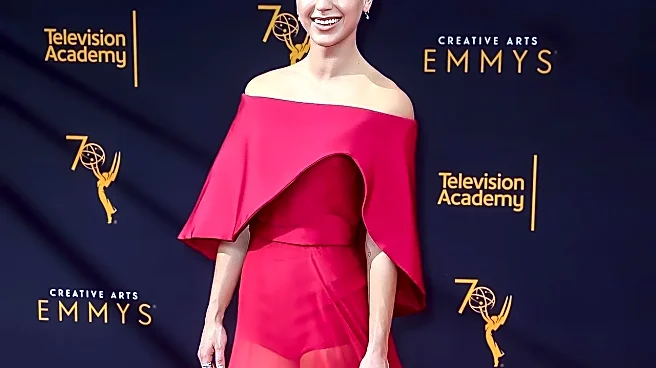
Before the main Primetime Emmy Awards broadcast that beams into millions of homes, there’s another, sprawling ceremony: the Creative Arts Emmys. Held over two nights, this is where the Television Academy honors the craftspeople who build the worlds we
love. We’re talking about the cinematographers, costume designers, sound mixers, hairstylists, and casting directors. It’s the industry’s biggest celebration of below-the-line talent, the engine room of television. And because it’s not the main, star-wattage event, the red carpet operates under a completely different set of rules. The global media scrutiny is dialed down, the pressure to wear a “major” designer is lessened, and the entire vibe is more of a passionate industry gathering than a high-stakes pageant. It’s less about celebrity and more about the celebration of skill, making it the perfect laboratory for sartorial experimentation that rarely gets utilized.
When Craft Trumps Celebrity
The attendees at the main Primetime Emmys or the Oscars are, for the most part, selling a product: themselves. Their red carpet look is a calculated part of a brand strategy, managed by publicists and stylists who broker deals with luxury fashion houses. The goal is flawless, aspirational perfection. A fashion misstep can generate days of negative press. But at the Creative Arts Emmys, the calculus is different. While recognizable faces from reality TV or guest acting categories do attend, the majority of nominees are the artisans themselves. Their careers are built on their talent for grading color, editing a scene, or designing a fantasy creature's costume, not on their ability to land a magazine cover. This fundamental difference frees them from the tyranny of the “Who are you wearing?” interview. It’s an opportunity to wear something personal, avant-garde, or just plain fun without jeopardizing a multi-million dollar brand identity. It’s a space where a production designer could theoretically wear a gown inspired by their own set designs, or a sound editor could sport a wild, futuristic piece. The very creativity being honored inside the theater could, and should, be reflected on the carpet outside.
A Call for Creative Chaos
Every awards season, we lament the sameness of red carpet fashion—the endless parade of safe, albeit beautiful, mermaid gowns and classic tuxedos. The events known for risk-taking, like the Met Gala or the Grammys, are the exception, not the rule. The Creative Arts Emmys present a missed opportunity to inject some of that anarchic spirit into the most prestigious television awards. While this past weekend's attendees included some stylish arrivals, the overall landscape remains relatively tame. Imagine if the nominees for Outstanding Fantasy/Sci-Fi Costumes arrived in outfits that reflected the genre's boundary-pushing ethos. Imagine if the animators and visual effects artists embraced vibrant, graphic, and unconventional silhouettes. This isn't a call for unwearable absurdity, but an invitation for attendees to see the red carpet as an extension of the creativity they pour into their work every day. By playing it safe, they are missing a chance to make a statement not just about their personal style, but about the innovative and imaginative nature of their craft.
The Freedom From the ‘Worst-Dressed’ List
Ultimately, the fear that stalks the A-list red carpet is the fear of public judgment. The internet’s capacity for dissecting and mocking an outfit is infinite, and for a major celebrity, the risk often outweighs the reward. For a Creative Arts Emmy nominee, however, that risk is exponentially lower. The online commentary is a murmur, not a roar. A bold or even bizarre choice is unlikely to become a trending topic. This is the definition of freedom. It’s the freedom to wear a color that’s “off-trend,” to choose a silhouette that’s architectural and strange, or to support a young, unknown designer. It’s the freedom to fail. After all, creativity is about taking risks, and not all of them pay off. But a red carpet filled with people who were willing to try something new would be infinitely more interesting than one where everyone plays by the same unwritten rules. This is the one night where the artists who build our favorite TV shows can show us who they are, not just what they can do.