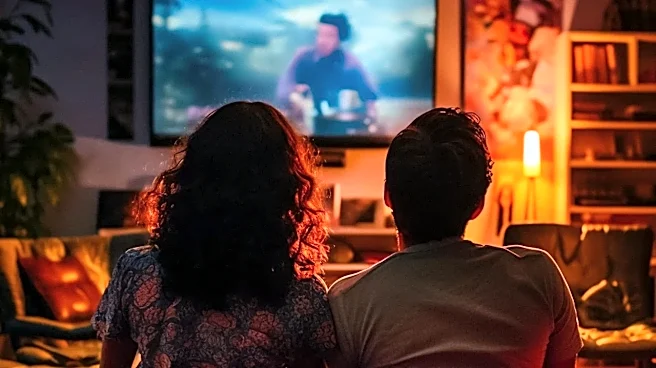

The Solo Watch: A Direct Line to Nostalgia
On a quiet weeknight, curled up on the couch, a holiday movie is a deeply personal affair. This is the time for intentional viewing, where the goal is emotional immersion. The predictable, comforting narratives
of holiday classics can reduce stress and trigger nostalgia, a powerful cognitive process that connects us to cherished memories. Psychologists note that rewatching familiar films requires less mental effort, providing a sense of comfort and control in a world that often feels chaotic. This solo experience is about revisiting the past—not just the movie's story, but our own. It's about remembering the first time you saw it, who you were with, and the magic that felt so real. The quiet allows for introspection, making the film a vehicle for personal reflection and emotional regulation.
The Party Watch: A Social Lubricant
At a holiday party, the movie's role completely changes. It transforms from the main event into a crucial piece of atmospheric architecture. Here, the film is not meant for deep, focused viewing; it's a social backdrop, a flickering piece of shared culture that fills awkward silences and sparks easy conversation. A movie like 'Home Alone' or 'National Lampoon's Christmas Vacation' becomes a source of universally understood one-liners and visual gags. It provides a shared focal point, reducing social pressure and creating a low-stakes way for guests to connect. The film's primary job is to generate a festive vibe—a collective feeling of warmth and humor that unites a room of people without demanding their full attention.
Choosing Your Weapon: Content for Context
The choice of film is dictated entirely by the setting. A quiet weeknight is perfect for the slow, sentimental journey of 'Miracle on 34th Street' or the earnest drama of 'A Christmas Carol'. These films demand emotional engagement and offer a rich, cathartic payoff that’s best experienced without distraction. They are the cinematic equivalent of a warm blanket. In contrast, the perfect party film is something you don’t need to watch closely to enjoy. It’s often a comedy with high energy and memorable, bite-sized moments. Think of the slapstick chaos in 'Home Alone' or the gleeful absurdity of Will Ferrell in 'Elf'. These movies are built for intermittent viewing, allowing guests to dip in and out of the story while mingling, eating, and celebrating. Their success is measured in laughter, not quiet contemplation.
Attention vs. Atmosphere
Ultimately, the difference comes down to function: are you seeking focused attention or ambient atmosphere? The solo weeknight watch is an active, lean-in experience. Your attention is the price of admission for the emotional journey the film provides. You are there to be transported by the narrative and characters. The party watch is a passive, lean-back experience. The movie is just one element in a multisensory festive environment. Its job isn't to monopolize attention but to contribute to a feeling. Research even shows that co-viewing can heighten emotional responses, suggesting that watching in a group amplifies the shared feeling, even if individual focus on the plot is lower. One setting asks the film to be the star; the other asks it to be the perfect supporting actor.