






An Arena for Revenge
To understand June 22, 1986, you must first go back to 1982. The Falklands War, a brief but brutal 74-day conflict over islands known as the Malvinas in Argentina, ended in a decisive British victory and a deep national humiliation for Argentina. The war
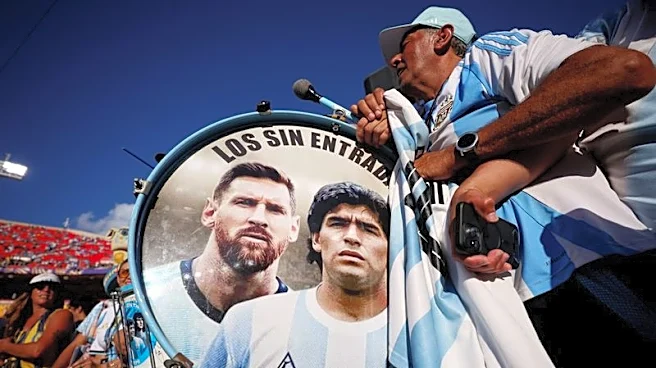
claimed the lives of over 600 Argentines and left lasting scars. So when the two nations were drawn to face each other in Mexico City's Estadio Azteca four years later, it was impossible to separate the sport from the political backstory. For many Argentines, this wasn't just a soccer match; it was the only battlefield on which they could seek retribution. Diego Maradona, Argentina's captain, would later admit what everyone was already feeling: "Although we had said before the game that football had nothing to do with the Malvinas war, we knew they had killed a lot of Argentine boys there, killed them like little birds. And this was revenge."
The Hand of God
For 51 minutes, the game was a tense, scoreless affair. Then, history was made through an act of blatant cheating. As the ball looped into the English penalty area, the 5-foot-5 Maradona challenged the much taller English goalkeeper, Peter Shilton. Instead of his head, Maradona used his left fist to punch the ball into the net. The referees, their view obscured, shockingly allowed the goal to stand. Maradona cheekily sprinted to the corner, urging his teammates to celebrate with him to sell the illusion. When asked about it later, he delivered one of the most famous lines in sports history, saying the goal was scored "a little with the head of Maradona and a little with the hand of God." For England, it was a moment of infuriating injustice. For Argentina, it was seen as cunning, street-smart revenge—divine intervention for a wounded nation.
The Goal of the Century
If the first goal was a symbol of gamesmanship and guile, the second, just four minutes later, was an act of pure, undeniable genius. Receiving the ball in his own half, Maradona embarked on a slaloming 60-yard run, a display of skill that remains unparalleled. He dribbled past five English players—Peter Beardsley, Peter Reid, Terry Butcher, Terry Fenwick, and Butcher again—before rounding the keeper Shilton to score. In 11 seconds, he had erased any doubt about his brilliance and sealed England's fate. In a 2002 FIFA poll, it was voted the "Goal of the Century." It was the perfect counterpoint to his first goal's controversy. One was a crime, the other a masterpiece. Together, they encapsulated the two sides of Maradona himself: the flawed rogue and the divine artist.
A Nation's Catharsis
Argentina won the match 2-1 and went on to win the entire 1986 World Cup, a victory that provided immense joy and unity to a country still recovering from military dictatorship and economic hardship. But for many, beating England was the true final. Former Argentine international Roberto Perfumo once stated, "In 1986, winning that game against England was enough. Winning the World Cup was secondary for us. Beating England was our real aim." The victory wasn't just a sporting triumph; it was a cultural and emotional milestone that elevated Maradona from a superstar to a national deity, a symbol of resilience and pride. The two goals—one of illicit cunning, the other of sublime skill—created a perfect, mythic narrative of vengeance that resonated deeply within the Argentine psyche.