








Welcome to LFF Expanded
For the past six years, the BFI London Film Festival has been quietly building a new dimension to its programming called LFF Expanded. This isn't just about showing films; it's about exploring entirely new ways to tell stories using technology that blurs
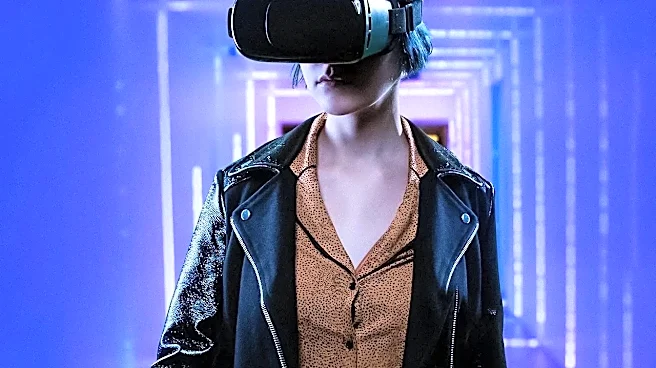
the line between the audience and the action. Think virtual reality (VR) headsets that transport you to another place, augmented reality (AR) that overlays digital elements onto your real-world surroundings, and even artificial intelligence that shapes a narrative based on your choices. It's a space where artists, filmmakers, and game designers converge, asking a fundamental question: what happens when you can step through the screen and into the story itself? The program showcases nine major projects this year across virtual reality, mixed reality, AI, and interactive gaming, demonstrating a clear commitment to pushing storytelling beyond its traditional container.
From Viewer to Participant
The core shift in the LFF Expanded program is the transformation of the audience's role. You are no longer a passive observer but an active participant. Take 'Solwata', a mixed-reality documentary narrated by Mark Ruffalo about the effects of climate change on the Solomon Islands. As you stand in the BFI's studio space, the experience uses digital elements to make water appear to flood the floor around you, rising intermittently to reflect the reality of the communities profiled. Another piece, 'Red the Ocean Around U', is an AI-guided digital environment that evolves based on the presence and decisions of each visitor. Instead of you asking questions of the AI, the AI asks questions of you, creating a collaborative story between the artist, the technology, and the viewer. This isn't just watching a film about a flood or an AI; it's feeling the water rise at your feet and co-authoring a mythic, dream-like journey.
Stories You Can Walk Through
Other projects transform storytelling into a form of interactive, environmental exploration. 'Water Body', an installation by the UK studio Marshmallow Laser Feast, is an immersive experience that visualizes the flow of water through landscapes, ecosystems, and even our own bodies, making an abstract planetary connection feel tangible and immediate. Meanwhile, the Games Lounge returns with titles that challenge the conventions of interactive media. One game, '...and Roger', is a visual novel that simulates the experience of dementia by making on-screen buttons quake and the screen itself appear to shatter, mirroring the plot's themes in its mechanics. 'Mixtape' follows three friends on a final adventure set to a soundtrack from bands like The Smashing Pumpkins and Joy Division, blending music, memory, and player choice into a potent coming-of-age narrative. These aren't just games; they are playable stories that use interactivity as a central narrative tool.
So, Is It Still Cinema?
This inevitably leads to the big debate. When a story unfolds in a headset, responds to your choices, or plays out like a game, can we still call it 'cinema'? For cinematic purists, the answer might be no. Cinema is seen as a precisely authored, two-dimensional medium presented to a static audience. But the curators and artists behind LFF Expanded argue this is not a replacement for cinema, but an evolution of it. They see it as an extension of film's long history of technological and formal experimentation. The festival's artistic director, Kristy Matheson, notes that we have always turned to artists to 'synthesise our times'. In an era defined by interactivity and digital worlds, it's only natural that our storytelling would follow suit. These immersive works still use core cinematic language—framing, sound design, editing, and narrative structure—but apply it to a three-dimensional, participatory canvas.