





Grounded Fantasy, Not Sanitized Fairy Tales
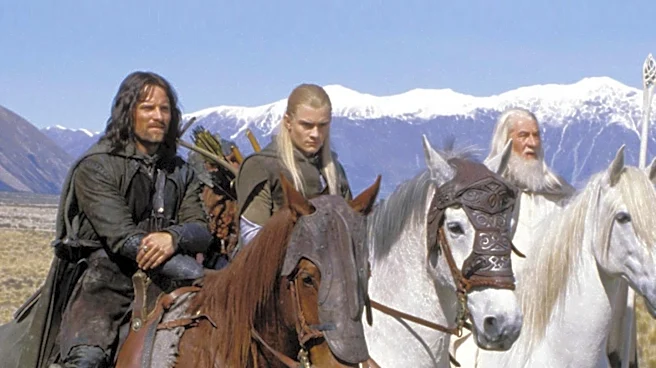
Before Peter Jackson's trilogy, mainstream fantasy cinema often felt sterile and theatrical. Jackson’s core innovation was to treat Middle-earth not as a fantasy world, but as a historical one. This philosophy of grounded realism became the foundation
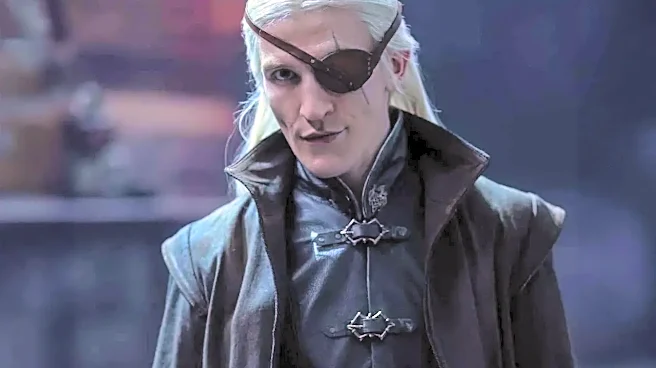
of his visual language. He wanted the world to feel ancient and lived-in, a place with its own cultures, languages, and deep history. This meant rejecting pristine, brightly lit sets in favor of a grittier, more tangible aesthetic. The lush, warm hues of the Shire give way to pale, lifeless landscapes as the journey progresses, using color to communicate the story's stakes. This commitment to realism convinced audiences and studios that fantasy could be a serious, mature genre, paving the way for franchises like Game of Thrones.
Old-School Magic: Bigatures and Forced Perspective
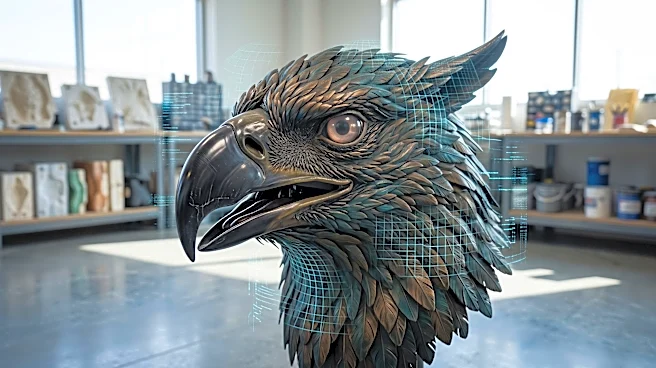
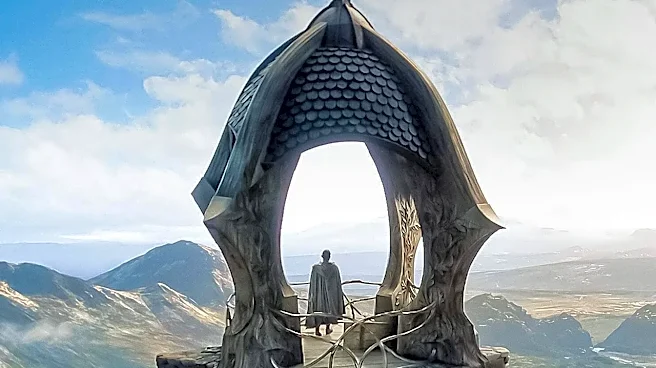
Instead of relying solely on nascent CGI, Jackson championed a blend of practical and digital effects. His crew at Weta Workshop became famous for creating “bigatures”—massive, highly detailed miniature models of iconic locations like Minas Tirith, Helm's Deep, and Isengard. These were not your typical tabletop models; some stood over 20 feet tall, allowing for intricate detail that gave the settings immense physical weight and texture. To create the illusion of Hobbits alongside taller characters, Jackson masterfully employed forced perspective, a classic cinema trick. He took it a step further by using moving camera rigs, where parts of the set would move in sync with the camera to maintain the illusion of different sizes even in a dynamic shot.
A Digital Army at His Command
For the epic clashes that the story demanded, Jackson needed an army. So he had one built—digitally. Weta Digital developed a revolutionary piece of software called MASSIVE (Multiple Agent Simulation System in Virtual Environment) specifically for the trilogy. This program allowed them to create huge crowds of A.I.-driven characters, or “agents,” who could act independently. Each digital soldier was given a 'brain' and could make its own decisions based on its surroundings, leading to chaotic and realistic battle scenes that were impossible to achieve by simply cloning animated figures. The Battle of Helm's Deep, with its tens of thousands of Uruk-hai, was one of the first cinematic battles powered by this technology, forever elevating audience expectations for large-scale conflict on screen.
The Camera as an Epic Storyteller
Jackson's visual language is also defined by how he moved his camera. Influenced by directors like Martin Scorsese, he favored a constantly moving camera, but adapted it for a more stately, epic feel. He treated his digital and miniature sets just like real locations, sending the camera soaring over and through them. This approach, of using sweeping virtual flyovers through fantastical environments, broke from the tradition of keeping special effects shots static. It made the world feel more immersive and vast. He combined this with an intimate, wide-angle lens style for personal moments, creating a dynamic range that could capture both the scale of a continent-spanning war and the subtle terror in a Hobbit's eyes.
The Legacy of Middle-earth on Screen
The techniques Jackson pioneered and perfected did not stay in Middle-earth. The MASSIVE software became an industry standard, used in films from Avengers: Endgame to Doctor Who to generate realistic crowds and armies. The gritty, lived-in aesthetic for fantasy became the dominant style for a generation, seen in everything from blockbuster video games to prestige television. His seamless blend of practical effects like bigatures with cutting-edge digital creations set a new benchmark for world-building. Jackson proved that a director with a singular, uncompromising vision could reshape not just a genre, but the entire technological and narrative landscape of blockbuster filmmaking.