





Defining the Archetype
Before we name names, let’s define the type. An “All Gas, No Calm” team isn’t just a good attacking side. The best teams, like 2014 Germany or 2010 Spain, blend potent attack with suffocating control. They starve you of the ball and pick you apart. They have
calm. Our chosen few have no such patience. Their philosophy is built on verticality, speed, and overwhelming the opponent, often leaving their own backline completely exposed. They play with a tactical recklessness that produces spectacular highs (a 4-3 win) and catastrophic lows (a 4-3 loss). They concede chances, trust their keeper to be a superhero, and believe they can simply outscore any problem. They might not lift the trophy, but they are never, ever boring.
Serbia, 2022 World Cup
Serbia entered the Qatar World Cup as a popular dark horse. With a frontline boasting Juventus’s Dušan Vlahović and Fulham’s goal-machine Aleksandar Mitrović, supported by the creative genius of Dušan Tadić, they were built to score. And they did. The problem? They couldn't defend to save their lives. Their tournament was a perfect microcosm of the “All Gas, No Calm” ethos. After a respectable 2-0 loss to Brazil, their campaign truly went off the rails. Against Cameroon, they went down 1-0, stormed back to take a 3-1 lead right after halftime, and then promptly conceded two goals in three minutes to draw 3-3. The final group match against Switzerland was even wilder: they needed a win and played like it, trading goals in a chaotic first half before ultimately collapsing in a 3-2 loss. Eight goals conceded in three games, a thrilling draw, and an early flight home. The absolute blueprint.
Argentina, 2018 World Cup
This wasn't the methodical, resilient Argentina that won in 2022. This was Jorge Sampaoli’s fever dream of a team, a top-heavy, structurally unsound vessel built entirely around the singular brilliance of Lionel Messi. The plan seemed to be: give the ball to Leo and hope for the best. The result was pure, unadulterated chaos. After a shocking 1-1 draw with Iceland and a humiliating 3-0 demolition by Croatia, their backs were against the wall. They squeaked into the knockout stage with a dramatic late winner against Nigeria, setting up a Round of 16 clash with France. That game was an all-time classic of attacking football and defensive ineptitude. Argentina took a 2-1 lead early in the second half, only to be blown away by French pace and power, eventually losing 4-3. They had Messi, Agüero, Di María, and Higuaín, but their defense was a turnstile. Every match felt like a high-wire act with no safety net.
France, 2022 World Cup Final
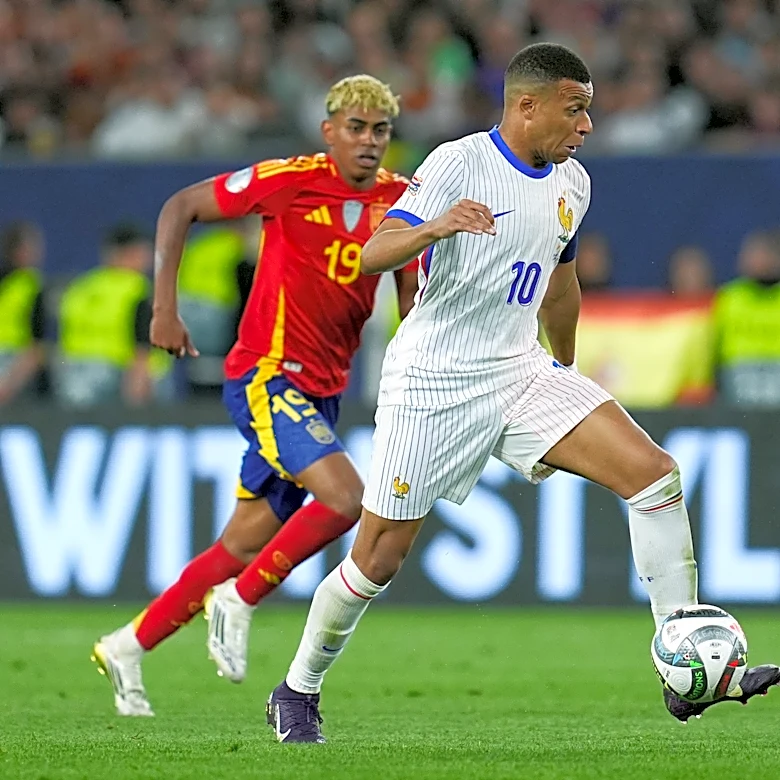
Wait, the runners-up? Absolutely. For 79 minutes of the 2022 World Cup final, France was the opposite of this archetype—they were all calm, no gas. Then, Kylian Mbappé happened. What followed was perhaps the greatest 45-minute explosion of “All Gas, No Calm” football in history. Down 2-0 and looking completely defeated, France threw caution, structure, and tactical discipline to the wind. Mbappé scored twice in 97 seconds to force extra time. They went down 3-2 to a Messi goal, only for Mbappé to equalize again with a penalty, completing his hat-trick. The game became a frantic, end-to-end slugfest where every attack from either side felt like it would produce a goal. Randal Kolo Muani was inches from winning it for France in the 123rd minute. It was a team that, when pushed, abandoned its championship composure for pure, desperate, adrenaline-fueled attack. They lost the penalty shootout, but their part in that final was a testament to the beautiful mayhem of throwing everything forward.
Brazil, 2014 World Cup
For much of the tournament on home soil, Brazil was scraping by on emotion, individual moments from Neymar, and a surprisingly rugged defense. They weren’t a vintage attacking side. But when their two pillars of calm—Neymar (injury) and Thiago Silva (suspension)—were removed for the semifinal against Germany, the team didn't just bend. It shattered into a million pieces in the most spectacular self-destruction in sports history. What followed wasn't a football match; it was a psychological breakdown played out in prime time. Without its talismans, the team’s only remaining gear was a panicked, disorganized forward surge. Germany, a team defined by control, simply walked through them time and time again. The 7-1 scoreline is the ultimate warning label for this playstyle. When the gas runs out and there’s no calm to fall back on, the result can be historic humiliation.