



The Maze as a Movie
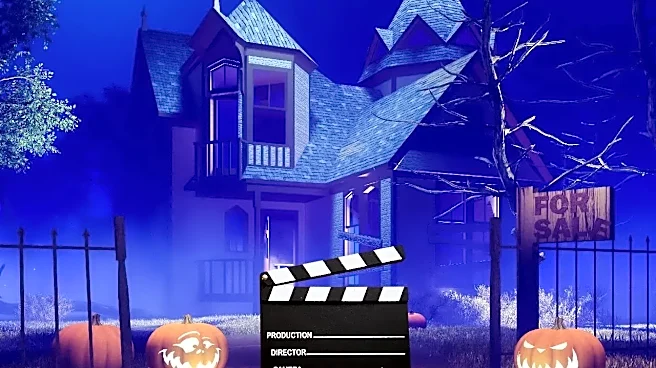
To understand the genius behind Halloween Horror Nights (HHN), you have to stop thinking about it as a haunted house and start seeing it as a film. The event's creative directors, like Universal Studios Hollywood's John Murdy, often describe their process
in cinematic terms. They aren't just building sets; they are directing a live, immersive movie where you are the main character. Each maze is a screenplay, meticulously storyboarded with specific beats, character moments, and, most importantly, edits. The entire experience, from the elaborate facades that act as an establishing shot to the final scare, is designed to tell a story. The team obsesses over creating iconic environments drawn from horror films or original concepts, ensuring there are enough unique scenes to build a compelling narrative walk-through.
Doorways as the Director's 'Cut!'
In film, an editor uses cuts to move between scenes, control pace, and create jarring transitions. At HHN, the designers use physical thresholds to achieve the same effect. Every time you pass through a doorway, a darkened hallway, or even a simple curtain, you are experiencing a live-action “cut.” This technique is fundamental to the design. A doorway allows the designers to instantly reset the environment. On one side, you’re in a quiet, tense bedroom; on the other, you’re in a chaotic, strobe-lit kitchen filled with noise. This transition acts as a hard cut in a movie, a sudden shift in location and mood designed to disorient you. It breaks your line of sight, forcing you to re-evaluate your surroundings and making you vulnerable. It’s a physical manifestation of an editor’s splice, controlling what you see and when you see it.
The Psychology of the Threshold Scare
This design philosophy is rooted in a deep understanding of human psychology. Our brains constantly try to make sense of our environment, but HHN’s “editing” intentionally disrupts this process. The moments of transition—the doorways—are the most powerful tool for this disruption. As you approach a threshold, your attention is naturally focused on what lies beyond. You're trying to process the new room, the new lighting, the new sounds. That moment of cognitive load is precisely when you are most susceptible to a scare. A performer can use the doorframe as a blind spot, lunging out just as your brain is occupied. The constant state of suspense keeps adrenaline pumping, while the sudden jump scares trigger a primal fight-or-flight response. By controlling the environment from scene to scene, the designers essentially guide your fear, building tension before a perfectly timed release.
From Theory to Terror in Practice
This technique is visible in nearly every maze. Think of walking through a house based on a film like The Exorcist. Creative Director John Murdy has explained that because so many key scenes happen in one bedroom, they had to design multiple versions of that room. The transitions between them—the “connective tissue”—become crucial editing points, using demonic imagery or subliminal flashes to bridge one scene to the next. In another maze, you might push through a hanging sheet only to be met with a blast of air and a loud noise, a combination of sensory inputs that functions like a cinematic smash cut. A scareactor doesn't just stand in a corner; they are placed at the “edit point” where they will have the most impact. The mantra drilled into every performer is that every 10 seconds is a new show, a new chance to reset the scare for the next group passing through their scene.