



The Gaze of Wonder
When you think of a Spielberg alien, what comes to mind? Is it the gentle, glowing finger of E.T. reaching out to a child? Or is it the childlike, curious beings of *Close Encounters of the Third Kind*, communicating not with laser cannons but with a five-note
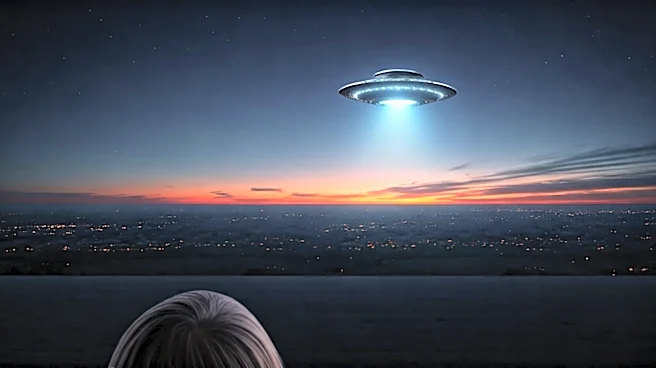
musical phrase? For Spielberg, the arrival of aliens is rarely a declaration of war. It’s a moment of profound, almost religious awe. His camera doesn’t just show us a spaceship; it shows us Richard Dreyfuss’s face, utterly transformed by what he’s seeing. The focus isn't on the alien tech, but on the human reaction to something impossibly bigger than ourselves. These stories aren’t about fending off an attack. They’re about making contact, about the universe tapping us on the shoulder and reminding us of our own capacity for wonder, fear, and ultimately, connection. The aliens are a catalyst for human discovery, not human destruction.
The Hollywood Invasion Playbook
Then there’s the other kind of alien movie—the one that has become Hollywood’s default setting. Think *Independence Day*. The aliens arrive, and within minutes, they’re vaporizing the White House. There’s no attempt at communication, no curiosity, no nuance. They are a monolithic, faceless threat designed for one purpose: to be a worthy punching bag for humanity’s military might. Films like *Battle: Los Angeles* or the Chitauri invasion in *The Avengers* follow this formula. The aliens are essentially space insects, a swarm to be exterminated. The drama comes from explosions, dogfights, and rousing presidential speeches. The spectacle is the point. These films are less about the cosmic mystery of ‘Are we alone?’ and more about the terrestrial thrill of ‘Can we blow them up good?’ It’s a narrative that prioritizes explosive action and collective, often jingoistic, defiance over personal, transformative awe.
The Exception That Proves The Rule
Of course, Spielberg himself directed an alien invasion film full of terror and destruction: 2005’s *War of the Worlds*. But even here, his signature approach shines through, making it the exception that proves the rule. While Roland Emmerich would show us generals huddled around a map in the war room, Spielberg glues the camera to Tom Cruise’s panicked father, Ray Ferrier. We don’t see the global invasion; we see a desperate dad trying to keep his kids safe. The alien Tripods are terrifying, incomprehensible forces of nature, much like a hurricane or an earthquake. We experience the invasion from the ground up, through the eyes of a fractured family. The horror isn't in the destruction of monuments, but in the intimate, visceral terror of survival. It’s not a story about how humanity fights back; it’s a story about how a family holds on. It’s an invasion film, but the subject is still, unmistakably, the human heart under pressure.
A Mirror, Not a Target
Ultimately, the difference comes down to a simple question: what is the alien for? In the standard Hollywood blockbuster, the alien is a target. It’s an external ‘other’ that allows humanity to unite, flex its muscles, and prove its resilience through spectacular violence. The aliens themselves are often uninteresting, a mere plot device to trigger the action. For Spielberg, the alien is a mirror. E.T. reflects our capacity for empathy and our fear of loss. The visitors in *Close Encounters* reflect our own yearning for meaning and connection in a vast universe. Even the terrifying invaders in *War of the Worlds* reflect our primal fears of powerlessness and our fierce instinct to protect our children. Spielberg isn’t interested in what aliens would do *to* us; he’s fascinated by what their presence reveals *about* us.