
From the Cockpit to the Highway
Before it was cool, the leather jacket was a tool. In the early 20th century, aviators like the Red Baron wore long, fur-lined leather coats to fend off the freezing wind in open-air cockpits. By World
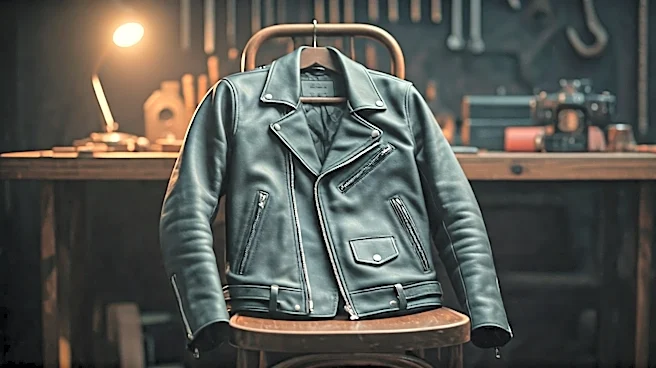
War II, this evolved into the iconic A-2 and G-1 flight jackets, durable and practical garments issued to American pilots. Simultaneously, a different version was taking shape on the ground. In 1928, a New York City company called Schott NYC designed the first motorcycle jacket, the “Perfecto.” With its asymmetrical zip to block wind and sturdy construction to protect a rider in a spill, it was a masterpiece of function-first design. For the first few decades of its life, the leather jacket wasn't about making a statement. It was about survival.
The Birth of the Rebel
Everything changed in 1953. When Marlon Brando slouched onto the screen as Johnny Strabler in “The Wild One,” his Schott Perfecto wasn’t just clothing; it was a costume for a new kind of American masculinity. It was the uniform of the outsider, the anti-hero who operated by his own code. The jacket instantly became a symbol of youthful defiance. Schools across the country banned them, fearing they would encourage delinquency. Of course, this only made them cooler. The leather jacket was no longer just for pilots and bikers. It was for anyone who felt a little misunderstood, a little restless, and wanted the world to know it without saying a word. James Dean cemented this image a few years later, making the jacket synonymous with a romantic, brooding rebellion.
The Soundtrack of Defiance
If Brando gave the jacket a soul, rock and roll gave it a soundtrack. From Elvis Presley in the ‘50s to the gritty, stripped-down uniform of The Ramones in the ‘70s, the leather jacket became the official uniform of counter-culture music. The Ramones, in particular, democratized it. Their uniform of ripped jeans, t-shirts, and matching black leather jackets was an accessible, anti-glam statement. It said, “We are a gang, we are against the mainstream, and you can be, too.” The punk movement in both the U.S. and the U.K. took this further, personalizing jackets with studs, paint, and band patches, turning a mass-produced item into a unique canvas of personal identity and tribal allegiance.
From the Street to the Runway
The jacket’s journey from subculture to high fashion is a key reason for its longevity. By the 1980s and ‘90s, designers like Jean-Paul Gaultier and Gianni Versace began putting leather jackets on the runway. They recognized the garment’s inherent power—its edge, its history, its sex appeal—and repackaged it as luxury. This act of appropriation did two things. First, it introduced the jacket to a new, wealthier audience, ensuring its visibility. Second, and more importantly, it preserved its rebellious spirit. Once the jacket became a high-fashion item, it could never fully belong to the mainstream. It always retained a connection to its outlaw roots, allowing a suburban mom or a Wall Street banker to borrow a piece of that Brando-esque defiance for a night.
An Armor of Identity
This is the real reason the leather jacket endures. It’s not a trend; it's an archetype. Other garments communicate wealth (a tailored suit) or status (a designer handbag), but the leather jacket communicates something more visceral: an attitude. It carries the history of pilots, bikers, rebels, and rock stars within its seams. Putting one on is like putting on a protective layer of cool. It’s a versatile shield that works with a t-shirt or a cocktail dress, capable of being both tough and chic. It has been adopted by so many different groups—from punks to pop stars, from bikers to supermodels—that it now belongs to no one and, therefore, everyone.