

The Age of Ostentatious Blandness
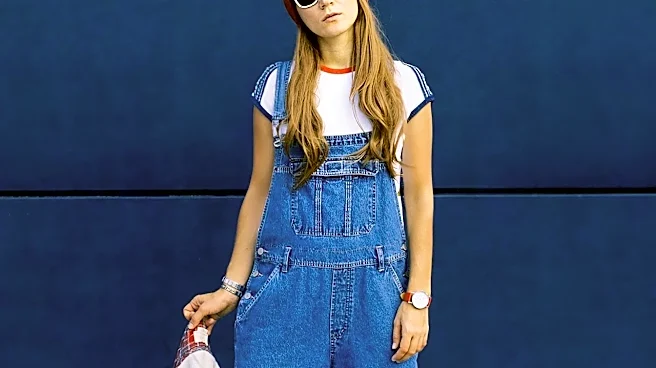
For a moment in the early 2010s, the pinnacle of cool was looking aggressively, stunningly average. The trend was dubbed "normcore," a portmanteau of "normal" and "hardcore." It was defined by unbranded basics: light-wash dad jeans, plain white tees,
fleece pullovers, and chunky, orthopedic-looking sneakers. The look was part suburban dad, part Midwest tourist, and entirely intentional. Coined by the art collective and trend-forecasting group K-Hole in a 2013 report, the term originally described a philosophical escape from the pressure to be unique. But fashion media quickly translated this idea into a literal uniform of blandness. Suddenly, style icons weren't rock stars, but figures like Jerry Seinfeld, whose on-screen wardrobe of sneakers and casual denim became an aspirational touchstone.
The Standard History: A Reaction to 'Try-Hard' Culture
The commonly accepted origin story positions normcore as a direct rebellion against the dominant "hipster" aesthetic of the late 2000s and early 2010s. After years of meticulously curated artisanal everything—from facial hair to fixed-gear bikes—a segment of the culture grew exhausted. The constant performance of individuality had become its own kind of uniform. Normcore offered an exit. By embracing sameness, you could opt out of the endless, draining competition for authenticity. It was a social posture that said, "I'm so over the need to stand out that I'm choosing to blend in." This narrative is true, but it’s only half the story. It explains the 'what' but misses the 'why'—why this specific form of anti-fashion felt so potent at that particular moment.
The Real Power Broker: The Billionaire in a Hoodie
The figure most histories of normcore skip is the one who gave it its quiet, aspirational power: the tech CEO. While fashion insiders were debating irony, figures like Steve Jobs and Mark Zuckerberg were creating a new template for power dressing. Jobs’ uniform of a black Issey Miyake turtleneck, Levi’s, and New Balance sneakers was a deliberate choice, a personal brand built on the idea of simplicity and focus. Zuckerberg took it a step further with his uniform of a grey t-shirt and jeans, explaining he wanted to reduce "silly or frivolous" decisions to conserve mental energy for his work. This wasn't just clothing; it was a public declaration of priorities. The message was clear: I am too busy building the future to care about something as trivial as fashion. This nonchalance became the ultimate status symbol in a world increasingly dominated by their creations.
Post-Recession Status and 'Founder' Worship
The rise of the tech-CEO-as-icon coincided with the long shadow of the 2008 financial crisis. In the aftermath, overt displays of wealth felt gauche and out of touch. The quiet, utilitarian aesthetic of Silicon Valley offered a perfect solution. It was a form of “stealth wealth” that communicated influence not through logos, but through a perceived indifference to them. While Zuckerberg’s grey t-shirts were actually expensive custom-made Italian garments, their visual effect was one of profound simplicity. For a generation entering a precarious job market, the tech founder became a new kind of idol. Dressing like them wasn't just about comfort; it was about channeling the perceived virtues of the tech world: efficiency, disruption, and a focus on substance over style. Normcore allowed people to adopt the posture of a powerful person without the price tag, making anti-fashion the most aspirational look of the decade.