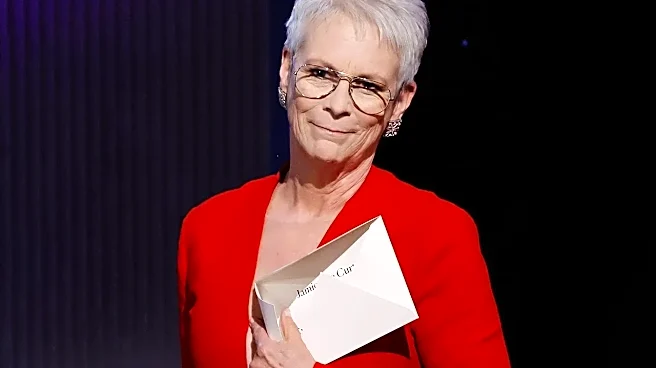




When the 'Halloween' theme music swells, audiences of all ages still show up for one reason: Jamie Lee Curtis. Her four-decade-plus run as Laurie Strode is more than just a Hollywood record; it’s a cultural phenomenon that defies time.
The Blueprint for the 'Final Girl'
It all started in
1978. As Laurie Strode in John Carpenter’s 'Halloween,' Jamie Lee Curtis became the blueprint for the 'final girl'. She wasn't a damsel in distress; she was a smart, resourceful high school student who fought back. For the Gen X and Boomer audiences who first saw it in theaters, Laurie was relatable and resilient, establishing an archetype that would define the slasher genre for years. Unlike her friends, she was introspective and responsible, qualities that helped her survive Michael Myers' initial rampage. This performance cemented Curtis as a 'scream queen,' but it also laid the foundation for a character fans would follow for a lifetime.
More Than a Scream Queen
To understand her enduring appeal, you have to look beyond Haddonfield. Throughout the '80s and '90s, Curtis actively avoided being typecast by building an impressively diverse resume. She proved her comedic genius in 'Trading Places' and 'A Fish Called Wanda,' and showcased her action-hero chops in 'True Lies'. This career pivot was crucial. It meant that a whole new generation, largely Millennials, met her not as a horror icon, but as a versatile movie star. For many, she was the empathetic mom in the 2003 hit 'Freaky Friday' long before they knew about her battle with Michael Myers. This broad filmography gave her a second, entirely separate fan base.
The Survivor Becomes the Hunter
When Curtis returned for the 2018 'Halloween' reboot, she wasn’t playing the same frightened teenager. This new trilogy presented a Laurie Strode who was a hardened survivor, a woman defined by decades of trauma and fiercely prepared for her tormentor’s return. This evolution was a stroke of genius. It gave original fans a powerful, satisfying arc for a beloved character and resonated deeply with modern audiences attuned to narratives of trauma and empowerment. No longer just a victim, Laurie was a formidable matriarch, protecting her daughter and granddaughter with tactical precision. This transformation from hunted to hunter gave the character a new, potent relevance.
The Authentic Off-Screen Icon
In an era of carefully curated celebrity, Jamie Lee Curtis’s authenticity is its own kind of superpower. She is famously candid, funny, and refreshingly honest about her life, from her own struggles with addiction to her fierce support for her children and colleagues. Her social media presence is less Hollywood gloss and more cool, wise aunt who isn't afraid to speak her mind. She has embraced her legacy, both as Hollywood royalty—the daughter of Tony Curtis and Janet Leigh—and as a horror legend, all while carving out a persona that feels genuine. For younger audiences, particularly Gen Z, this combination of legacy and realness makes her an enduring icon worthy of their attention. Her recent Oscar win for 'Everything Everywhere All at Once' only solidified her status as a beloved and respected Hollywood veteran who is still very much at the top of her game.